
In brief
A recent study from Macquarie University reveals that affixing LED lights to the underside of surfboards may offer a promising, non-invasive approach to reducing shark attacks, particularly from great white sharks, by altering their silhouette against the ocean.
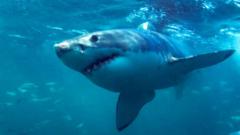
Australian researchers have found that attaching LED strip lights to surfboards could potentially reduce the risk of shark attacks, particularly those involving great white sharks. This innovative study, led by scientists from Macquarie University, took place in Mossel Bay, South Africa, where various configurations of lights were tested on seal-shaped boards to observe their attractiveness to sharks.According to lead researcher Laura Ryan, the illuminated boards distorted the silhouette of their "decoy" shapes, making it more challenging for great whites to differentiate between surfers and seals against the sunlight. The researchers emphasized that this method could serve as a non-invasive alternative to conventional shark deterrence techniques, such as nets or drones.Great white sharks are the primary species linked to fatal shark bites on humans, often attacking from below while mistaking the surfers' outlines for those of seals. Recent statistics reveal that in 2023 alone, there were 69 unprovoked shark bites recorded globally, with the majority occurring in the United States, Australia, and South Africa—resulting in 10 fatalities.The study, published in the journal Current Biology, involved testing three different intensities of LED lights. The results indicated that the brightest, horizontally-aligned lights attracted fewer sharks. The researchers concluded that a dark silhouette set against a lighter ocean surface could substantially influence predatory behavior in great white sharks, paving the way for innovative, non-invasive shark deterrent technologies to safeguard human life.Interestingly, researchers noted that great whites were less drawn to the most conspicuous lights, diverging from other studies that suggested many shark species were attracted to bright objects. Building on their findings, the team is now developing prototype lighting strips intended for use on surfboards and kayaks.As shark attacks continue to pose a threat to surfers worldwide, this research opens up a potential new avenue for enhancing safety in waters frequented by these apex predators.

