In brief
The Hungarian parliament elected former Supreme Court chief András Baka as president, a break from Viktor Orbán’s long time hold on power. Baka, who spent 17 years serving at the European Court of Human Rights, must oversee the creation of a new constitution and curb the Prime Minister’s term limits, promising broader democratic debate. The new government has already ended emergency decrees and dissolved the Sedex office that monitored critics. Fidesz accuses the change as tyrannical, but Baka pledges to prioritize the people over former strong‑man control. Baka’s brief tenure may last only until the constitution is adopted, but his vote may reshape Hungary’s political balance.
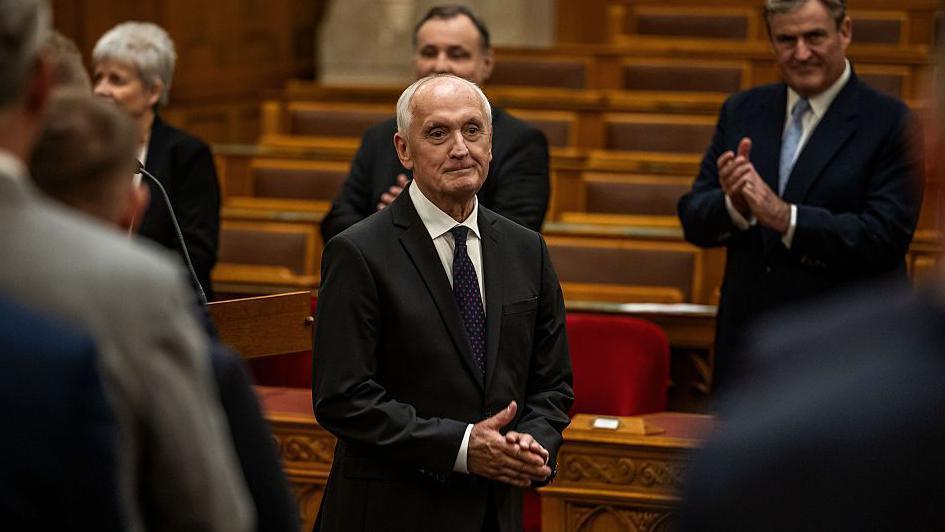
Hungary’s parliament has elected András Baka, 73, a respected former head of the Supreme Court, to the largely ceremonial presidential post.
Baka’s election signals an envisioned reversal of Viktor Orbán’s political legacy. The new head of state will be tasked with overseeing the drafting of a new constitution and limiting the Prime Minister to two parliamentary terms.
A record 27 laws and two constitutional amendments have already been enacted since the new government took office, canceling the emergency powers used by Fidesz and abolishing the Sedex office that had monitored critical voices.
The Fidesz opposition walked out of the chamber in protest after the ousting of Tamás Sulyok, reflecting lingering divisions.
In parliamentary speech Baka promised the widest possible debate around the new constitution, stating that “the state is not for itself but for the people.”
Despite his non‑political image, Baka acknowledges that the current shift may restrict MPs’ term limits, an issue he viewed as an intrusion on voters’ choices.
With a tenure limited to five years or until the constitution comes into force, Baka’s role is meant to be transitional.
The new president’s stance signals a stronger counter‑balance to the entrenched power structures that were dominant under Orbán.