In brief
The monsoon‑driven flood that struck the Nepal‑Tibet border killed more than 1,300 people. Over a week later, Nepal’s army rescued two survivors from deep within a tunnel that had been buried in mud and rocks. The operation has given families who have yet to locate missing relatives a renewed sense of hope. Despite the immense difficulty of moving debris and tackling treacherous terrain, the Army continues its search in the hopes of finding others still trapped. The story, reported by BBC’s South Asia correspondent Azadeh Moshiri, illustrates how even the most harrowing conditions can produce moments of human resilience and collective relief.
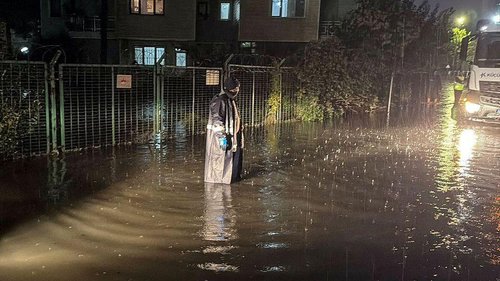
A flood that set the Nepal‑Tibet border on fire last month left a trail of devastation, claiming over 1,300 lives. More than a week after the catastrophe, Nepal’s armed forces pulled two people alive from the depths of a collapsed tunnel that had been buried under a wall of mud and rocks.
The operation was no easy feat – the tunnel, a hidden artery beneath the mountain, was shrouded in debris and the surrounding terrain was treacherous. Yet the Army’s persistence and ingenuity, using hydraulic equipment and manual rescue teams, managed to carve a path that led to human life.
For families who have been waiting in the dark, the story offers a glimmer of relief. “It’s a rare moment of joy in a sombre situation,” said Azadeh Moshiri, the BBC’s South Asia correspondent. Families who feared the worst for their missing relatives now have a renewed belief that those trapped might still be alive.
Despite this success, the ongoing search remains fraught with challenge. Mudslides have continued to block access, and with limited daylight and harsh weather, rescuers are pressed to act swiftly yet carefully.
The Army’s efforts underline the complexity of disaster response in mountainous regions, where natural hazards can quickly turn ordinary infrastructure into formidable obstacles. Yet the tangible result of the tunnel rescue serves both as a testament to human perseverance and as a beacon that might encourage habitation and planning in similar fragile environments.
Related Readings:
- 'Layer upon layer of miracles': How Nepal flood survivors were rescued from tunnel
- 'Nepl rescuers try to reach dozens trapped in tunnel after two found alive'
While the rescue offers a hopeful narrative, the real challenge lies ahead: ensuring that communities remain safe and that such salvages can be planned for the future. For now, the recovered survivors and the families rejoicing in their return echo the timeless resilience of human spirit.