
In brief
The Greek island of Santorini continues to grapple with an increase in seismic activity, marked by a recent 5.3 magnitude earthquake. With thousands of tremors recorded in recent weeks, authorities have declared a state of emergency and schools remain closed, while residents and tourists face uncertainty.
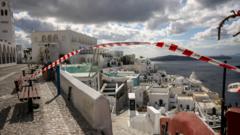
Santorini is enduring a startling surge in seismic activity, with experts now contending with the implications of a powerful 5.3 magnitude earthquake that struck the island. This latest tremor is the strongest recorded in recent weeks, following a series of smaller earthquakes that have kept the local population and weather services in a state of concern. As the seismic waves ripple through the region, the tremors have been felt as far as Athens, with a current focal depth recorded at 17 kilometers (approximately 10.6 miles). The situation remains precarious for residents of the nearby island, Amorgos, who are on increased alert after several moderate earthquakes were reported, including a recent 5.0 magnitude quake.The flurry of seismic activity around Santorini actualized a total of over 12,800 earthquakes detected by the University of Athens' Seismological Laboratory since late January. Some locals have resorted to patrolling precarious areas to prevent tourists from venturing too close to dangerous cliffs following frequent landslides.Although initial inspections revealed no structural damage to buildings on Santorini or Amorgos, the sheer volume of earthquakes – with over 11,000 locals opting to evacuate – signals the potential for escalating turmoil. Consequently, schools across several islands, including Santorini and Amorgos, will remain shuttered on the next school days, giving priority to the safety of students.In a proactive step toward ensuring safety, a Special Disaster Response Unit has dispatched a specialized earthquake rescue vehicle to Amorgos, where teams plan to inspect the local electricity infrastructure. Prof. Kostas Papazachos from the Aristotle University of Thessaloniki cautioned that seismic uncertainty may persist at least throughout February. He articulated, "Let's hope that we will slowly move toward a gradual de-escalation… We will have to be a little patient." Despite the hopes for easing activity, the possibility of a major quake remains a concern.The tourism sector is feeling the impact, as evidenced by the recent rerouting of the cruise ship Viking Star, which opted for Crete to avoid potential congestion at Santorini's cable car system during the ongoing seismic activity.Greece, located in a seismically active region known as the Hellenic Volcanic Arc, typically experiences frequent earthquakes, but the recent cluster of tremors remains a source of intrigue for scientists. While authorities have stated their correlation with tectonic plate movements rather than volcanic activity, the unpredictability inherent in these seismic events continues to manifest anxiety for locals and visitors alike.
