In brief
The astonishing remains of a 50,000-year-old baby mammoth, Yana, have been unveiled in Siberia, heralded as the best-preserved specimen of its kind, highlighting ongoing prehistoric discoveries in melting permafrost landscapes.
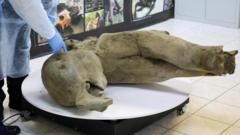
Scientists from Russia have introduced the remains of an incredibly well-preserved baby mammoth, estimated to be about 50,000 years old, which were discovered this summer in the thawing permafrost of Yakutia, Siberia. Named "Yana," after the river basin where she was found, this specimen is being hailed as the best-preserved mammoth carcass ever discovered. Weighing over 100 kilograms (approximately 15 stones) and measuring 120 centimeters (4 feet) in height and 200 centimeters in length, Yana is believed to have been around one year old at the time of death. Prior to this discovery, there were only six notable similar finds globally—five located in Russia and one in Canada.The remains were uncovered in the Batagaika crater, the largest permafrost crater in the world, by local residents who fortuitously stumbled upon the almost entirely thawed mammoth. Maxim Cherpasov, the head of the Lazarev Mammoth Museum Laboratory, noted that the individuals "were in the right place at the right time." They utilized a makeshift stretcher to carefully retrieve Yana from the ground.Although predators and birds typically consume the thawing remains, Cherpasov pointed out that Yana's head remains particularly well preserved, despite some forelimbs having been eaten. Researcher Gavril Novgorodov posited that the young mammoth likely got trapped in a swamp, which helped it remain intact for millennia.Currently, Yana's remains are undergoing study at the North-Eastern Federal University located in Yakutsk, where scientists are performing tests to ascertain the exact timing of her demise. The unearthing of Yana is not an isolated event; other prehistoric findings in Russia’s permafrost continue to emerge as climate change leads to the thawing of formerly frozen landscapes. Only last month, researchers showcased the partial mummified remains of a sabre-tooth cat believed to be about 32,000 years old, and earlier this year, a 44,000-year-old wolf was also discovered in the region.