In brief
As the peak climbing season for Mount Everest unfolds, a substantial glacier blockage is impeding climbers' ascent. Icefall doctors face challenges navigating a 30-meter-high ice block, leading to a potential backlog of climbers waiting for the route to open. Experts anticipate the ice will melt shortly, yet uncertainties about the climbing window persist, forcing considerations for alternative routes and airlifting teams to facilitate climbing preparations.
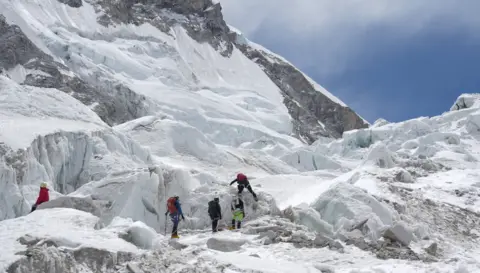
A huge, unstable chunk of glacier is blocking the route up Mount Everest from Base Camp in Nepal just as peak climbing season gets underway in the Himalayas. 'Icefall doctors' – who fix ropes and ladders on the lower part of the route up the world's highest peak - have found no way around a 100-foot-high (30m) block of ice just under Camp 1. They are now waiting for this massive ice block, referred to as a serac, to melt, which they hope will take place within days.Due to the prolonged blockage, climbers are weeks behind schedule for spring ascents, when weather conditions are typically most favorable. Concerns are rising over possible traffic jams on the route as climbers strive to summit during a limited window of opportunity.Purnima Shrestha, an experienced climber, mentioned that the delays are causing increased anxieties among climbers about potential queuing to reach the peak. 'We usually climb between Camp I, Camp 2, and Camp 3 during the acclimatization process, but these route delays have created additional traffic concerns this year,' she expressed from Base Camp.The icefall doctors, working for the Sagarmatha Pollution Control Committee, usually complete route preparations by mid-April, but have still not managed to clear the path to Camp 3, remaining blocked by the glacier approximately 600m below Camp 1. SPCC base camp coordinator Tshering Tenzing Sherpa stated, 'We haven't found artificial ways to melt it so far, so we are left with no option but to wait for it to melt and crumble itself.'Meanwhile, the Department of Tourism in Nepal is exploring alternate strategies, including the possibility of airlifting teams to Camp 2 to facilitate rope-fixing operations higher up the mountain. As favorable weather is anticipated only until the end of May, the hope is that the ice will melt quickly to allow climbers to reach the summit before conditions worsen.While there are concerns about the blockage prolonging preparations, the spirit remains high among climbers, with many having already obtained permits despite various global challenges. The situation underscores the ever-changing nature of climbing in high-altitude environments, where safety and timing are crucial.