French Wildfires Intensify: Planes Pour Water to Cool Burning Landscapes
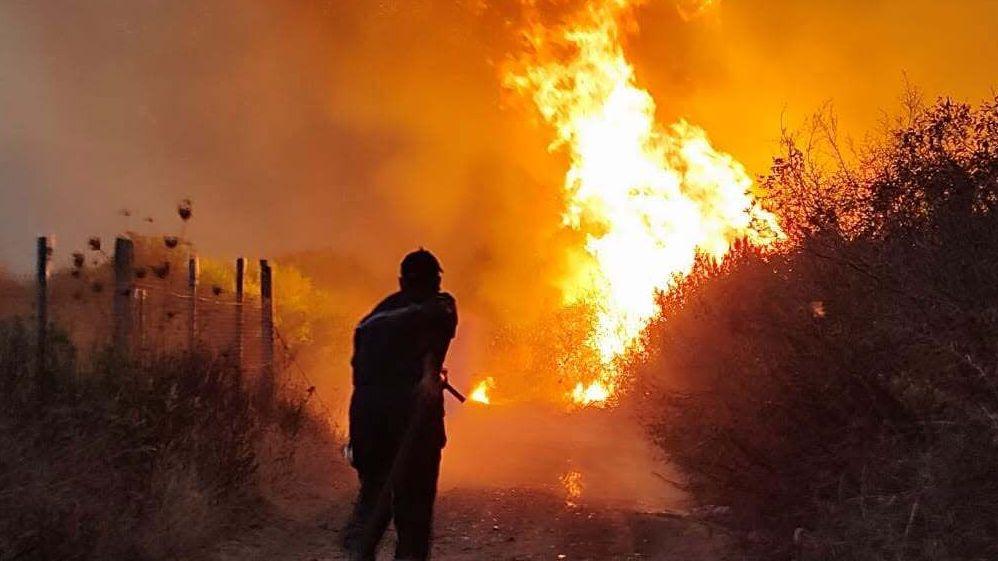
In the wake of highs that have surpassed historical records, French authorities have turned to an unusual tactic — deploying multiple aircraft to douse vast swaths of flames with water. Late Sunday evening, the Army’s aviation units carried out a series of drops across the forested edges of the Luberon and Massif Central regions, delivering an estimated 20,000 litres of water to more than twenty active fire fronts.
Local firefighters reported that the sudden infusion of liquid has temporarily slowed the spread of the blaze, giving ground crews time to secure the perimeter and extend their protective clementes. While the visual calm may be brief, the operation underlines a reality that France, like many countries, is increasingly forced to rely on aerial intervention as wildfire seasons lengthen and intensify due to climate change.
Meteorological sensors across the country recorded temperatures hovering at 37 °C over extended spell—a level that promotes extreme dryness and fuels ignition. Analysts warn that if such conditions occur over the next few weeks without the application of coordinated suppression efforts, more extensive damage could occur.
Why Airborne Suppression? Short‑Term Relief, Long‐Term Gaps
Aircraft, including the military Drones and the Red Cross‑operated Water‑Slingers, remain the fastest means of delivering suppressants to distant or otherwise inaccessible zones. In France, where many wildfire hotspots lie within dense forest canopies or perched on hilltops, these drops provide a crucial bridge while ground crews tackle the primary burn front.
The French Ministry of the Interior released a brief on the mission’s logistics: “Three Dassault Falcon 900‑S managed to perform eight full‑capacity drop sorties. Support aircraft from the French Air Force also participated, ensuring pre‑emptive coverage for the northern sector of the central massif.” However, the Ministry added that the approach is only a “short‑term tactical move” and must be complemented by long‑term forest management and controlled burns to reduce fuel load.
Implications for Climate‑Resilient Fire Policy
Experts echo concerns that climate‑driven heat waves will expand the reach and severity of wildfires across Europe. The European Environmental Agency estimates that future heatwave periods will increase by 30–40% over the next two decades under a high‑emissions scenario. Consequently, the air‑based suppression strategy reflects an interim act of defense while more sustainable mitigation frameworks lag behind.
Environmental NGOs suggest that reducing emissions, preserving old-growth forests, and re‑introducing natural fire cycles into spatially managed zones could help curb the cycle of catastrophic storms. “Airplanes are most effective at buying time, but the only real solution is to let fire burn in socially managed places,” notes campaigner Léa Dubois.
Governance bodies in France, such as the national agency for fire and forest (Prévent’Fêtes), have called for increased funding of public–private partnerships to update firefighting infrastructure and expand early‑warning radar coverage, as part of a holistic adaptation plan.
While the current missions have succeeded in preventing loss of property and human lives in several localized zones, analysts stress that without a larger commitment to forest stewardship, these interventions will become ever more common. In the coming days, French authorities will release more detailed data outlining fire distribution, aircraft deployment timelines, and long‑term strategic planning.
For now, the skies over France carry a concert of silvery dropping sound—a symbolic reminder of a planet that increasingly turns to aviation as weather extremes grow and the temperature gauge climbs. The grave lesson? Successful suppression of wildfires depends not only on the rapid resource of air—high‑altitude jets delivering water—but also on the roots below: how a landscape is maintained, monitored, and managed against an inevitable climate future.