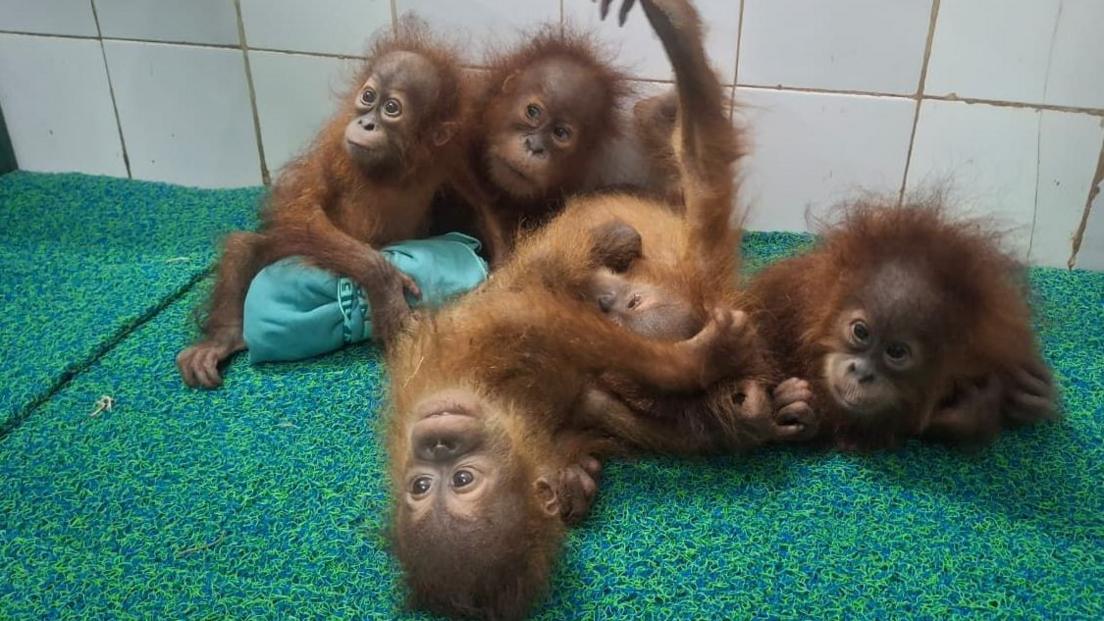
In the early hours of Tuesday, a group of local villagers in Balasore district of Odisha reported an unlikely sight – five startlingly young orangutans gathered together on the forest floor and eating bananas amidst the undergrowth.
The rescued apes have been taken to Nandankanan Zoological Park in the state capital of Bhubaneswar where they are currently under careful observation and in quarantine, safeguarding them from dengue and other natural threats while investigators work out the mystery behind their presence.
Orangutans are not native to India. The three recognized species – Bornean, Sumatran and Tapanuli – are critically endangered, with populations living only in the rainforests of Indonesia and Malaysia. The fact that these five youngsters were found near a highway and a proposed reserve forest called Ranakata, close to the West Bengal border, suggests they were likely transported by road rather than having migrated naturally.
Odisha’s forest minister, Pratik Prakash Indalkar, stated that the animals were found only two or three days before rescue – a short window which points to a recent arrival. The local fire-and-brave forest officers and Indian Wildlife Crime Control Bureau have been jointly established—creating an unprecedented task force to chase the origins of the illegal smuggling operation.
The situation is set against a grim backdrop: over the past decades, deforestation, habitat loss and poaching have driven orangutans to the brink of extinction. While international conventions such as CITES ban the commercial trade of these apes, illegal smuggling continues, with a handful of traffickers bringing babies into neighbouring countries to sell as exotic pets or to collectors.
Older reports, such as the 2022 case of two orphaned orangutans discovered at a checkpoint between Assam and Mizoram, highlight another grim chapter of animal trafficking. The repeated presence of orphaned babies far from their natural range remains a chilling reminder of the global illegal wildlife trade that still persists despite strict protections.
The discovery of five infant orangutans in Odisha – with no adult presence nearby and no clear path to their rescue – leaves wildlife experts alarmed. Juvenile orangutans rely on their mothers for years to learn vital survival skills, and their reproductive rate is extremely low, with females breeding once every eight years. The loss of even a few young could have a lasting impact on the species’ already precarious population.