In brief
Ethiopian authorities have announced the seizure of thousands of rounds of ammunition allegedly sent by Eritrea to support rebel groups, intensifying fears of renewed conflict. Eritrea denies the allegations, accusing Ethiopia of fabricating pretexts for war. The historical context of the relationship between these two nations, marred by skirmishes and mistrust, adds weight to the current escalation of rhetoric, as the situation remains volatile following a short-lived peace between 2020 and 2022.
Ethiopian police say they have seized thousands of rounds of ammunition sent by Eritrea to a violent armed rebel group, stoking fears of renewed armed conflict.
Eritrea has denied the allegation and accused Ethiopia of floating false flags to justify the war that it has been itching to unleash for two long years.
This comes at a volatile moment for the relationship between the Horn of Africa neighbors, which share a fractious and violent history. Hopes of tentative peace, forged during a 2020-22 civil war in northern Ethiopia, have of late given way to a war of words over control of the Red Sea. This latest claim appears to be a sign of further escalation.
On Wednesday, Ethiopian police said in a Facebook statement that they had seized more than 56,000 rounds of ammunition in the Amhara region intended to arm the Fano rebels, and had arrested two suspects.
The preliminary investigation conducted on the two suspects who were caught red-handed has confirmed that the ammunition was sent by the Shabiya government, a term for Eritrea's ruling party, they said.
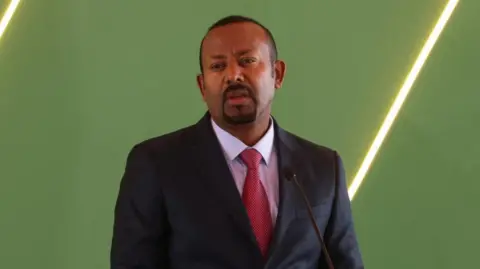
Eritrea's Information Minister Yemane Gebremeskel denied the claim and accused Ethiopian Prime Minister Abiy Ahmed's Prosperity Party (PP) of seeking a pretext to attack.
Relations between the two countries have frequently been strained. After a decades-long battle for independence, Eritrea, which has a 1,350km (840-mile) Red Sea coastline, officially seceded from Ethiopia in 1993, leaving it landlocked.
Five years later, a border war erupted in which more than 100,000 people died.
In 2018, the two nations signed an historic declaration to normalize relations. Eritrean troops then fought in support of the Ethiopian government during the civil war that broke out in Ethiopia's Tigray region.
But relations soured when Eritrea was excluded from the peace deal that ended the conflict in November 2022.
In the three years since, Ethiopia's government has been grappling with a violent insurgency, waged by the Fano rebels, who now control large parts of its northern Amhara region.
Eritrea has previously denied meddling in Ethiopian affairs.
Ethiopia's calls for access to the Red Sea through Eritrea have caused relations with Eritrea to further strain in recent months.
Ethiopian Prime Minister Abiy first openly declared in 2023 that his nation's access to the sea was an existential matter, which Eritrea dismissed.
In an interview earlier this week with state-run media, Eritrean President Isaias Afwerki accused Abiy's party of declaring war on his country. He said Eritrea did not want war, but added: We know how to defend our nation.
Abiy has stated that Ethiopia does not seek conflict with Eritrea and wants to resolve the issue of sea access through dialogue.