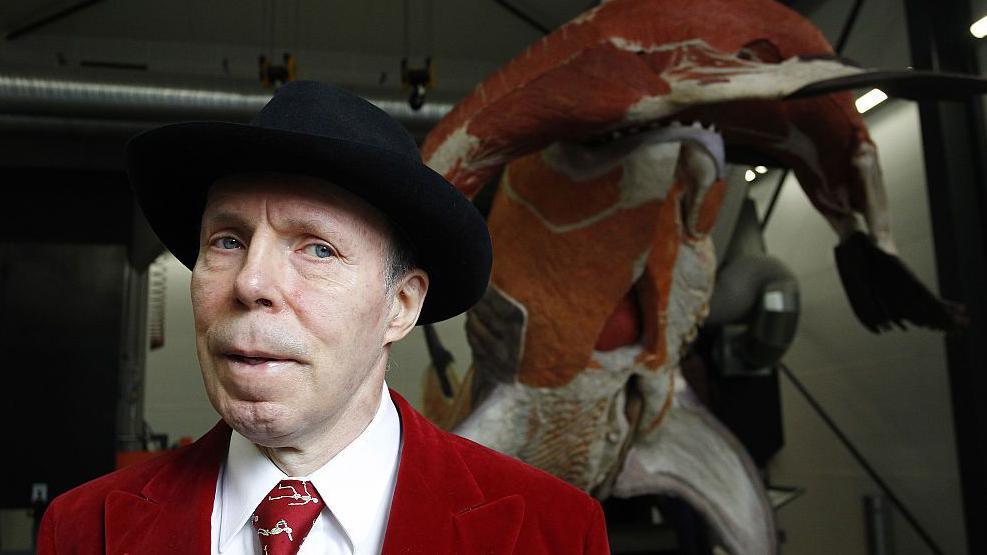
Dr Death Dies: The Controversial Legacy of Gunther von Hagens
Police reports confirm the death of German innovator Gunther von Hagens, the man behind the magnetic Body Worlds exhibitions and the inventors that made plastination possible. He was 81 and passed on Friday in a Heidelberg clinic after a sudden brain haemorrhage. He had endured Parkinson’s disease for almost twenty years.
The family issued a statement saying he had explicitly requested that his cadaver be plastinated as his final wish. They intend to carry out the plan, a move that echoes his lifelong desire to share anatomical truth even in death.
Over a decade, more than 58 million visitors crossed the doors of Body Worlds shows. Critics—including numerous faith organisations—challenged the ethical foundations of displaying dissected and preserved corpses. Supporters, however, praised the exhibitions for making anatomy approachable to the general public and for providing a visual frontier for medical education.
Von Hagens was born in war‑time Poland and grew up in communist East Germany. He fled to the West in 1970 and soon after invented plastination – the technique of replacing bodily fluids and fats with rubberise polymers. The process soon found widespread use in academic settings, but it was not until the late 1990s that he took the displays on the road worldwide, turning popular scientific displays into headline attractions.
Peers have described him as a pioneer, researcher and inventor, while detractors see him as a voyeur profiteering from death. In 2002 he shocked the public by broadcasting the first-ever London autopsy after a century’s hiatus, generating debate around the legality and morals of public dissection.
His death leaves an unquiet legacy: a figure who bridged the gap between science and spectacle, inspiring fascination and unheard‑of controversy on nearly every side of the debate about human remains.