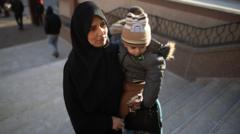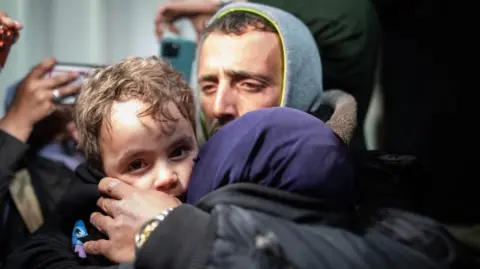
Two Gazan women who recently passed through the reopened Rafah crossing described a troubling experience involving security checks by a local militia, exacerbating the already tense situation for returnees. Lamia Rabia, traveling with her children, recounted how their passage involved not only escort by Israeli forces but also searches at an Israeli military checkpoint conducted by members of the Abu Shabab militia.
Rabia revealed that the militia's presence during security screening raised alarm bells regarding the treatment of individuals attempting to enter Gaza. In her account, she mentioned a woman from the militia who conducted searches on female travelers without any communication, merely following orders. This method of operation highlighted the blurring of lines between the responsibilities of Israeli security and local militia oversight.
Despite the supposed facilitation for returning citizens, significant delays meant that only a small number of those eligible were allowed through after lengthy security checks. Reports indicated that while 50 individuals were scheduled to cross, only 12 succeeded due to ongoing issues at the checkpoint.
Amidst the criticism for the harsh realities at the Rafah crossing, including confiscation of personal belongings by EU personnel under the guise of monitoring, humanitarian organizations called for increased scrutiny and oversight. The European Union is reviewing the potential for delegating monitors to assist newcomers facing difficult treatment.
Compounding the issues, reports from Gaza officials indicate that many patients in dire need of evacuation remain stranded. With an estimated 20,000 Palestinians requiring medical assistance abroad, the limited capacity for crossing points raises profound humanitarian concerns.
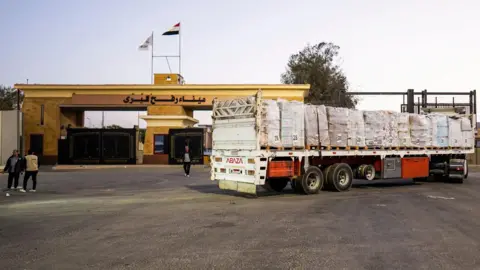
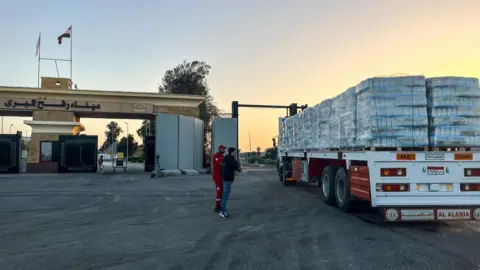
The reestablishment of the Rafah crossing has thus emerged not simply as a logistical measure but also as a flashpoint for underlying tensions between Hamas, militias, and various governance structures within Gaza. This situation places all stakeholders on a precarious path as calls for humanitarian support meet the complexities of local political dynamics.