
In brief
Nathaniel Qainoo's transformation from accountant to mechanic reflects the widespread despair among Ghana's youth as elections approach. With inflation soaring and job opportunities dwindling, the focus remains on economic recovery, with presidential hopefuls vying to restore faith in the nation's future.
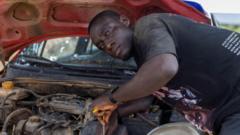
Ghanaian Nathaniel Qainoo, once an accountant, now finds himself a mechanic, struggling for a better life in an economy that seems adrift. At just 29, he has faced the disillusionment of joblessness since graduating five years ago. When the BBC caught up with him in the small town of Kasoa, it was under a mango tree where he diligently repaired a taxi, highlighting the struggle for survival amid a deteriorating economic landscape.The scene exemplifies widespread hardship faced by many in Ghana, particularly after the crushing economic crisis that began in 2022. That year, the government defaulted on debt repayments, credit rating agencies declared the nation in “junk status,” and inflation soared to an alarming 54%. The cedi, Ghana's currency, has depreciated by 70% over the last eight years, prompting the government to seek a substantial $3 billion bailout from the International Monetary Fund (IMF). As a consequence, pensioners and investors holding government bonds have suffered significant losses.Qainoo's disillusionment has driven him away from civic engagement; he will not participate in the fast-approaching presidential and parliamentary elections. “I don't know how this country is going to be saved from this crisis,” he expressed, yearning for a future abroad in North America or Europe where he believes he could live and work more productively.Young Ghanaians are increasingly disenchanted, representing almost 40% of the population and confronting a 14% unemployment rate. Economic issues have overtaken traditional campaign topics, with major political figures now at the forefront.Former President John Mahama aims to reclaim power from Mahamudu Bawumia, the sitting Vice President, both seeking to succeed President Nana Akufo-Addo, who is stepping down after two terms. Bawumia’s presidency, under the banner of the ruling New Patriotic Party (NPP), is marred by challenges brought on by an economy in decline, dubbed a “whizzkid” turned “driver’s mate” in an attempt to disassociate himself from previous administration troubles.Bawumia is focusing on revitalizing the economy through a "digital economy" initiative, vowing to create jobs for youth and invest heavily in tech entrepreneurship. In stark contrast, Mahama insists on resetting the economy while addressing past power crises he oversaw during his term from 2014 to 2017.Promising tax reforms to alleviate the burden on citizens, both candidates face skepticism about their strategies under the conditions of the current IMF-supported recovery program. Analysts are divided on how successful either will be in implementing their proposals, given the complexity of maintaining fiscal discipline during a crisis.As polls show Mahama slightly leading, the split predictions highlight a possible pivotal point: whether he can secure more than 50% of the electorate or risk a runoff against Bawumia, who remains hopeful about propelling the country into a new historical chapter as its first Muslim president. The political stakes are high as voters weigh their frustration with economic hardship against their aspirations for a better future.

