China’s Animal Cruelty Video Sparks Censorship and Global Outcry
When a brutal video of a stray dog and her puppies burning to the ground went viral on Chinese social media, authorities cracked down – warning that theorized child offenders would be treated quietly and urging netizens to avoid online harassment. Yet the backlash across mainland China was louder than the state’s attempt to silence it.
The footage, filmed in Jieyang, Guangdong, shows four boys under fourteen lashing a mother dog with sticks before setting her on fire. The video’s visual shock value sent millions to the forums, sparking outrage, calls for legislative action, and a sudden spike in searches for “Wang Wang” (the dog’s name) and “animal protection.”
In response, officials posted a public statement warning netizens against dissemination. China’s censorship apparatus removed posts containing the boys’ faces, though the footage could still circulate via snippets. The state’s policy on child offenders – generally a higher threshold for media exposure to protect minors – meant that, technically, no criminal charges were applicable to the boys.
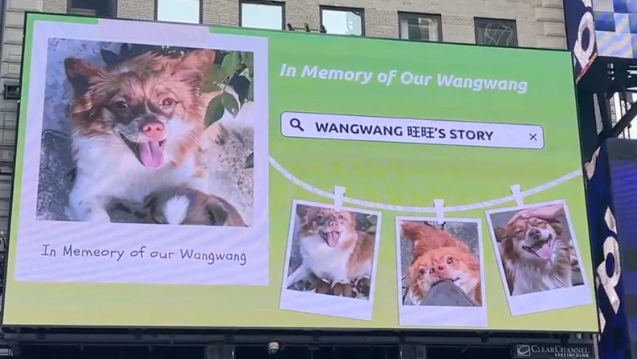
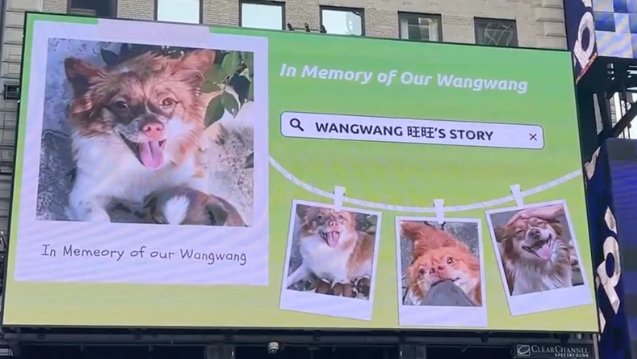
Despite censorship, the public response grew into sustained activism. In New York’s Times Square, a rotating digital screen repeatedly displays a photo of Wang Wang and a caption that reads: “She was loved. She wanted to live. She should still be here.” Across Taiwan, a billboard near Taipei 101 carries the image of the dog nursing her puppies and the text “This planet is their home too. Justice for Wang Wang.”
Activists in Hong Kong and Macau used public transport advertising to place posters on buses and trains. Global NGOs such as the International Organisation for Animal Protection received upwards of 100 reports from the public and have pressed Chinese authorities for intervention, though no official yet has taken concrete steps toward new animal‑cruelty legislation.
Within China, domestic businesses have participated in the campaign. A beauty brand and a streetwear label placed billboards outside shopping malls, and stickers featuring Wang Wang and her puppies are now sold on Taobao. However, the sale and display of such material can be interrupted by local authorities; a staff member at a mall in Changsha recalled receiving a notice telling them to remove the campaign signs.
Online, platforms such as Weibo and X keep the discussion alive. Persistent comments urge users to “continue posting” and remind that “constant speaking up does not disturb social order but raises awareness.” At the same time, content about the boys and the incident is being selectively deleted, reinforcing the tension between state control and public advocacy.
The tragedy of Wang Wang’s death is now emblematic of a growing civil‑society movement demanding accountability and legal reform. While Chinese authorities claim to protect minors, the broader debate centers on animal cruelty laws that China currently lacks, and on the broader limits of censorship in a digital age that is increasingly global in reach.