China Outpaces U.S. in Global Favorability, Pew Finds
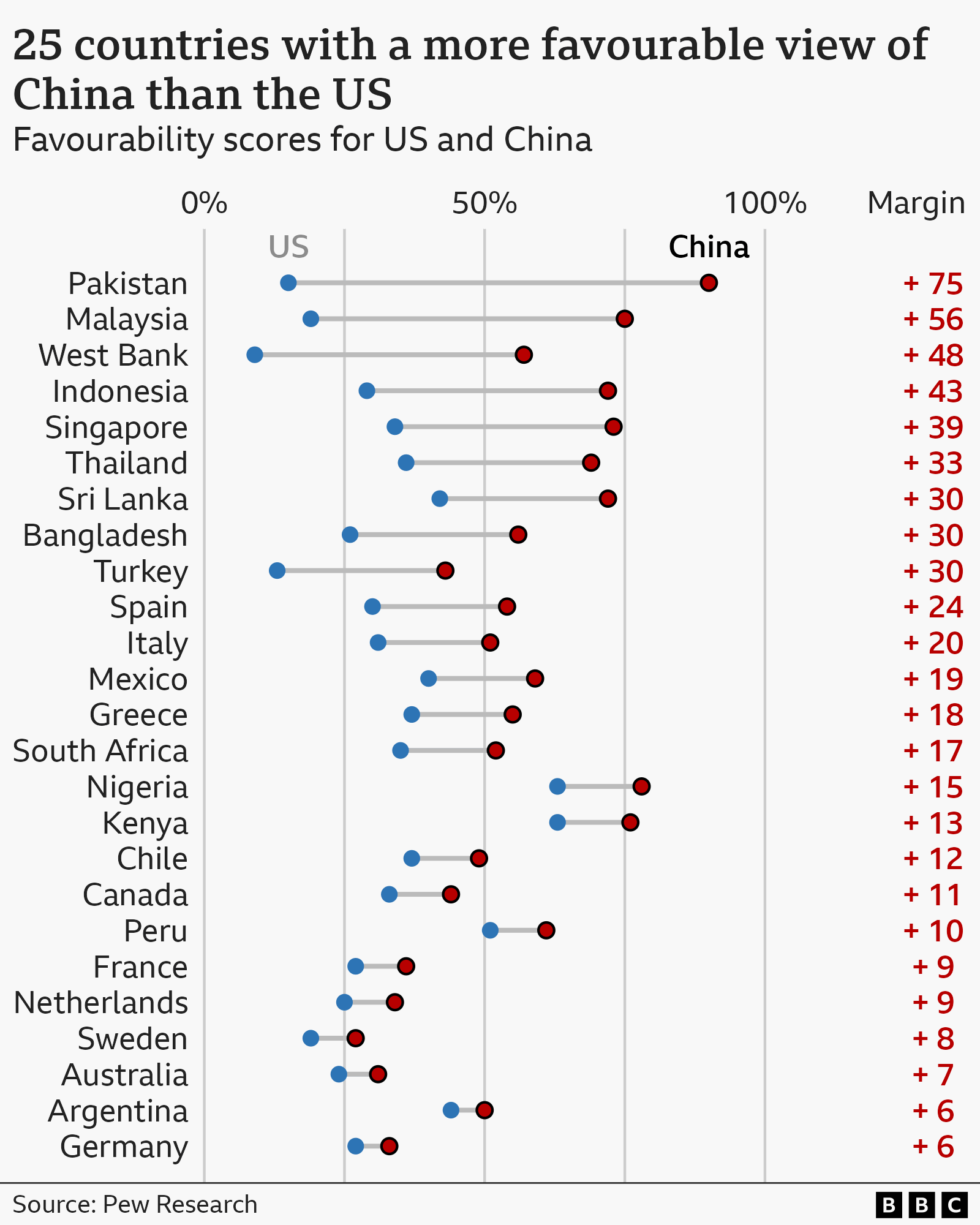
A fresh Pew Research Center survey, conducted from February to May 2026 across 36 countries and covering more than 42,000 respondents, reports that China now enjoys a more favourable public image than the United States in 25 of those nations—a first for the think‑tank since it began tracking global sentiment in 2002.
The study’s key finding is a spike in China‑favourability, with record highs in countries such as Italy, Spain, Colombia, Mexico, Indonesia, Malaysia, Nigeria and Turkey. By contrast, U.S. approval has steadily declined, especially after the tumultuous period of Donald Trump’s presidency and the subsequent rise of U.S. policy volatility.
Chart Snapshot
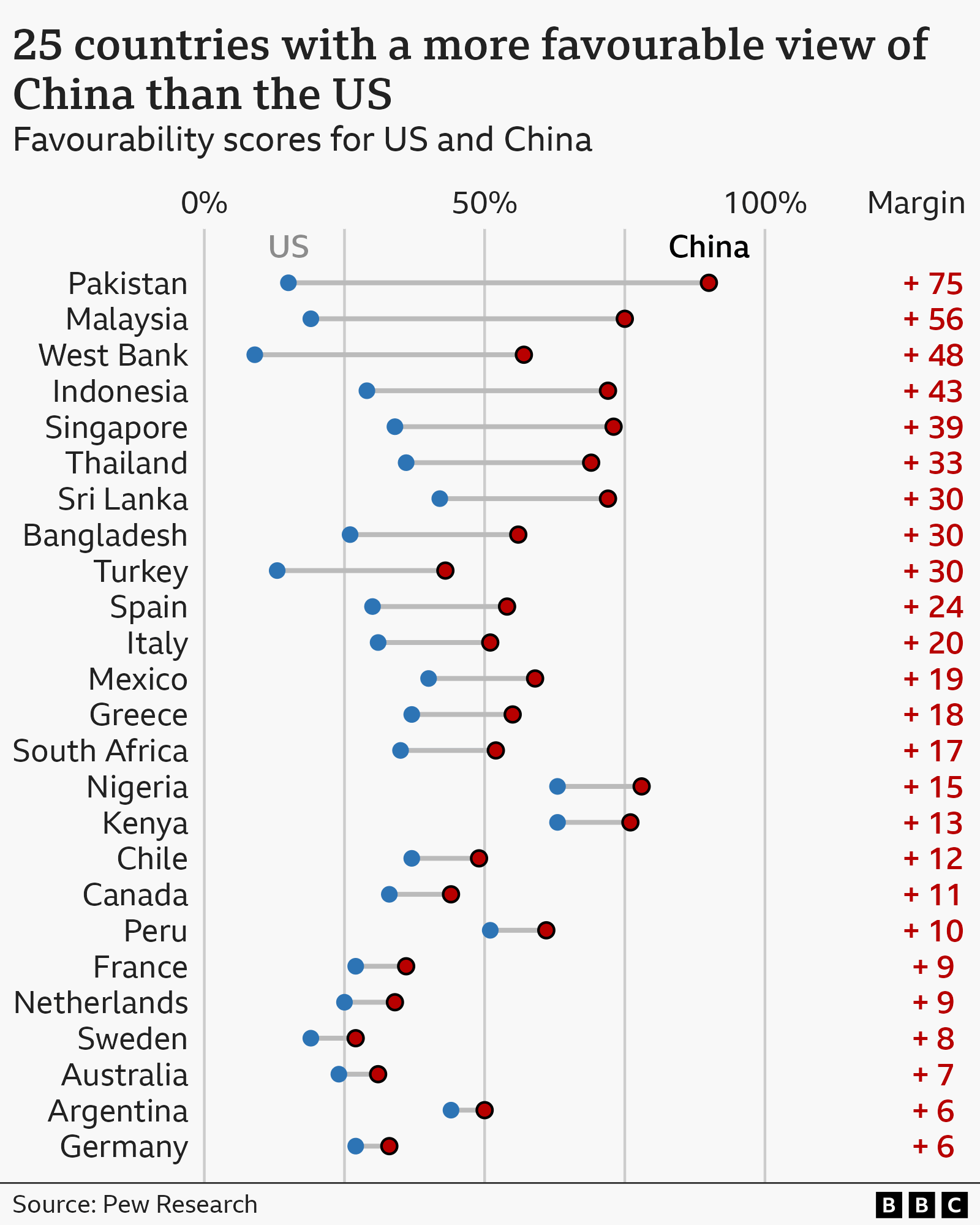
Favourability scores for China are higher in 25 of the 36 surveyed countries, with the exception of six strong U.S. allies—Poland, the Philippines, South Korea, India, Japan and Israel—where U.S. approval remains slightly ahead.
Overall confidence in leaders is low, but China’s Xi Jinping is generally judged more favourably than U.S. President Donald Trump. The highest confidence for Xi reached 83% in Pakistan and dipped to 7% in Japan; for Trump the best rating was 68% in the Philippines and the lowest 4% in the West Bank/East Jerusalem.
U.S. supporters still claim the United States better protects personal freedoms, though the gap with China has narrowed. A median of 75% of respondents in middle‑income countries felt the U.S. interferes “a great deal or a fair amount” in foreign affairs, versus 45% for China.
Queering the data further shows that middle‑income nations tend to favour China, whereas wealthier countries trend toward negative views—Singapore being a notable exception with high GDP and strong China favourability.
Speculators point to U.S. policy volatility as the critical driver of Asian and European scepticism, while China’s strategic soft‑power campaigns—highlighted by technological advances and reciprocal cultural exchanges—appear to bolster its global image.
This surge in China’s favourability sets the stage for a new global narrative, suggesting that Western geopolitical dominance may soften in the face of a rapidly stabilising, if still uncertain, Chinese leadership.