
In brief
The fiery blaze in Gironde is being tackled by a coordinated effort of aerial water drops, ground crews, and volunteers, in the face of record temperatures. Helicopters and Canadair aircraft drop vast water loads, while pilots spray fire‑retardant to choke flames. As the smoke lifts, injuries and evacuations loom, prompting volunteers to support the effort from the frontlines. Local residents, from Pierre Alexandre to Hugo and nurse Maëlys, illustrate the human toll and resolve in the fight for their homes. With 50,000 hectares already lost, experts caution that future quenching will rely heavily on continued aerial and volunteer support.
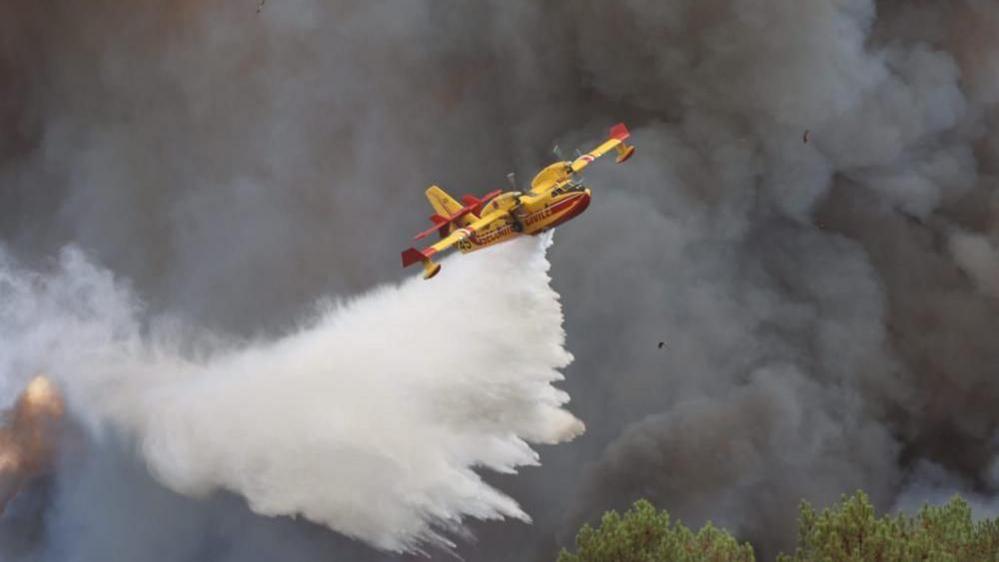
The wildfires that have scorched France’s Gironde region as a scorching 40 °C heatwave sweep across the avenue, have left fire crews scrambling for firefighting pre‑eminent on the road. Helicopters and Canadair aircraft dart overhead dropping more than 1,000 gallons of water per sortie, painting an aerial drumbeat against the black plume. Their sky‑borne water is soon followed by helicopters spraying thick red fire‑retardant, their plumes bridging the gap between the flames and calm ground.
When the smoke briefly dims, seasoned firefighters trail into the forest on foot, setting temporary fire‑breaks and experimenting with a process called “noyer” – literally drowning the soil and vegetation to stop the next spark. These teams move from Brittany to Marseille and Lyon, indicating the scale and cooperation demanded by this crisis.
"The temperature peaked at 40 °C, and if the flames restart on their own we’ll still be fighting," says one seasoned firefighter. He stresses that containment is a continuous operation, not a cure.
"I told my son to leave while my wife and daughter fled to the countryside, but he chose to stay," Pierre Alexandre confesses. Backed by a local view of the sky and the storm, the man shows a photo of his house roof, ready to help his family out of the fire.
"I am a nurse and I’ve moved two‑way between the hospital and the forest, treating those injured with firework smoke," nurse Maëlys explains. The volunteer community, from Hugo to the next generation, is the second line in this wave of defence, working with water tanks, extinguishing embers, and advocating that 50,000 hectares deserve a second chance.

