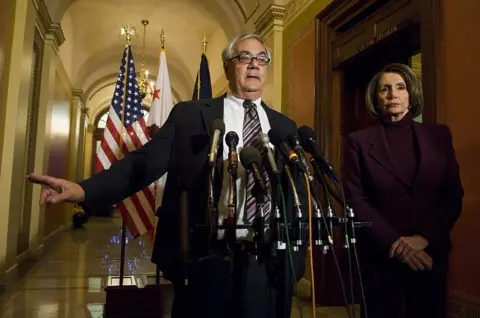
Former US congressman Barney Frank, who famously took on Wall Street and was one of the first openly gay representatives, died on Tuesday night at the age of 86, according to US media reports.
Frank, a Democrat who represented southern Massachusetts in the House of Representatives for over three decades, had been in hospice care at his home in Maine since April. He will be remembered as a trailblazer for LGBT rights, being the first member of Congress in a same-sex marriage, and for his significant contributions to financial regulation after the 2008 financial crisis.
He was, above all else, a wonderful brother. I was lucky to be his sister, Frank's sister Doris Breay told NBC Boston.
Jim Segel, Frank's former campaign manager, reflected on Frank's peaceful acceptance of his fate, saying, He notified everybody that he was in hospice, so it was just a matter of time. He was certainly at peace with himself. Segel further emphasized Frank's impact as a civil rights leader and his critical role in the 2008 financial crisis response.
Frank served in Congress from 1981 until 2013, where he was a key architect of the Dodd-Frank Act. This legislation instituted new regulatory measures and tightened restrictions on banking practices in the aftermath of the Great Recession.
Signed into law in 2010 by then-President Barack Obama, the Act represented a significant reform of financial regulations following the subprime mortgage crisis. While some of its provisions were later loosened by President Donald Trump, the Act remains a cornerstone of modern financial oversight.
In addition to his financial reform work, Frank advocated for LGBTQ rights, actively supporting the end of the 'Don't Ask, Don't Tell' policy and pushing for protections against workplace discrimination for LGBT individuals, though his efforts in this area ultimately did not succeed.
Prejudice is based on ignorance, Frank remarked during his retirement preparations in 2011, emphasizing the need to challenge misconceptions through visibility and reality. During his final months, Frank shared his thoughts on his legacy and the political landscape, expressing both disgust for the current state and optimism for the future. I'm filled with disgust at the current state, but optimism that it's going to get better, he stated earlier this month in an interview with CNN's Jake Tapper.
Frank, a Democrat who represented southern Massachusetts in the House of Representatives for over three decades, had been in hospice care at his home in Maine since April. He will be remembered as a trailblazer for LGBT rights, being the first member of Congress in a same-sex marriage, and for his significant contributions to financial regulation after the 2008 financial crisis.
He was, above all else, a wonderful brother. I was lucky to be his sister, Frank's sister Doris Breay told NBC Boston.
Jim Segel, Frank's former campaign manager, reflected on Frank's peaceful acceptance of his fate, saying, He notified everybody that he was in hospice, so it was just a matter of time. He was certainly at peace with himself. Segel further emphasized Frank's impact as a civil rights leader and his critical role in the 2008 financial crisis response.
Frank served in Congress from 1981 until 2013, where he was a key architect of the Dodd-Frank Act. This legislation instituted new regulatory measures and tightened restrictions on banking practices in the aftermath of the Great Recession.
Signed into law in 2010 by then-President Barack Obama, the Act represented a significant reform of financial regulations following the subprime mortgage crisis. While some of its provisions were later loosened by President Donald Trump, the Act remains a cornerstone of modern financial oversight.
In addition to his financial reform work, Frank advocated for LGBTQ rights, actively supporting the end of the 'Don't Ask, Don't Tell' policy and pushing for protections against workplace discrimination for LGBT individuals, though his efforts in this area ultimately did not succeed.
Prejudice is based on ignorance, Frank remarked during his retirement preparations in 2011, emphasizing the need to challenge misconceptions through visibility and reality. During his final months, Frank shared his thoughts on his legacy and the political landscape, expressing both disgust for the current state and optimism for the future. I'm filled with disgust at the current state, but optimism that it's going to get better, he stated earlier this month in an interview with CNN's Jake Tapper.