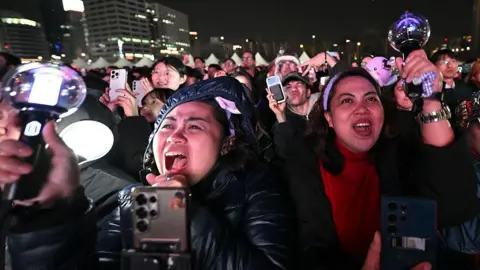
BTS 2.0 is just getting started! J-Hope proclaimed alongside his bandmates as they ascended the stage for a highly anticipated return on March 21. The comeback concert featured the group performing against the historic backdrop of Seoul's royal palace, drawing tens of thousands of fans and amassing more than 18 million live-stream views from around the world.
However, beneath the exuberant surface lies a tension spurred by their latest documentary, revealing differing opinions within the group about their agency, Hybe, and its influence on their artistic identity. The members are caught between the expectations of their old and new fandoms, and they are navigating the expectations of being global icons.
A central question looms: Is BTS deviating too far from their K-pop roots to cater to an international audience? This sentiment echoes within South Korea, where concerns arise over their authenticity amidst a surge of English lyrics and globalized production styles, intensifying debates among fans about the essence of their music.
Critics, however, see this experimentation as a natural evolution for the group, which has inspired a dedicated global following. With 'Arirang' at the forefront, BTS aims to strike a balance between their cultural heritage and the commercial allure of Western markets while embarking on a historic tour comprising 85 dates across five continents.
As excitement builds for their return to the stage, the challenge lies in harmonizing their artistic vision with the expectations of a diverse audience while navigating the pressures of fame that their unique journey has brought.