In brief
Tessa Moura Lacerda's journey to amend her father's death certificate symbolizes the broader struggle for recognition faced by victims of Brazil's military regime. As new films reignite discussions of this dark past, many families continue their fight for acknowledgment and justice, reflecting the deep-seated trauma that still affects a nation.
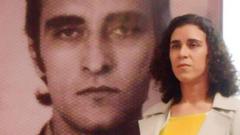
Tessa Moura Lacerda stood outside a government office on a rainy day in August 2019, holding a document that represented years of struggle. In her hands was her father's death certificate, finally corrected to read "unnatural, violent death caused by the State to a missing person [...] in the dictatorial regime established in 1964." Tessa's father, Gildo Macedo Lacerda, was tortured to death in 1973 at the young age of 24, a victim of Brazil’s military dictatorship that spanned from 1964 to 1985.During this grim period, a national truth commission found that at least 434 individuals were killed or went missing, while many more experienced detention and torture. Tessa's parents were arrested in Salvador, Bahia, in October 1973 as they participated in a left-wing political movement opposing the military regime. While her mother, Mariluce, was released following interrogations, Gildo disappeared, believed to have succumbed to the brutal interrogations within a military facility.In the immediate aftermath of Gildo's death, misinformation permeated the media landscape, with conflicting accounts of his fate. False narratives propagated by the authoritarian government obscured the truth, leaving families like Tessa's to grapple with uncertainty. The family's original death certificate, issued in the aftermath of a 1995 law allowing for recognition of missing persons, left Gildo's cause of death blank.For Tessa, who never knew her father, the recognition of his death has been a pivotal aspect of her life narrative. Her mother gradually shared painful memories of Gildo, shaping Tessa's understanding of her father's legacy. Yet without a proper burial or official acknowledgment, Tessa recalls feelings of unresolved grief. "It's like I have a corporal memory of this fear," she reflected. The familial trauma of such loss lingered throughout her childhood and into adulthood, manifesting in anxiety surrounding her own children.Her triumph in rectifying Gildo's death certificate, though a personal victory, symbolizes a wider struggle for acknowledgment of political dissenters killed or disappeared during the regime. Brazil announced plans to rectify certificates of all recognized victims, addressing the role of the state in these tragic deaths, following renewed efforts under President Luiz Inácio Lula da Silva after the commission was reinstated.Interest in Brazil's tumultuous past resurged thanks to the recent film "I'm Still Here," directed by Walter Salles. This work, adapted from Marcelo Rubens Paiva's memoir, recounts the fight for justice experienced by those who lost loved ones to state violence. The legacy of such narratives resonates deeply with Brazilians today, amidst a backdrop of political polarization and rising extremist rhetoric.For many, watching "I'm Still Here" sparked intense emotions, reminding them of their connections to that historical trauma. Marta Costta, who awaits acknowledgment for her aunt, shared in the grief stirred by the film—a testament to the collective experience of loss and suffering tied to Brazil's violent history.While the rectification of death certificates represents a step forward, Tessa and others remain aware of the ongoing challenges. The amnesty laws remaining in place prevent accountability for perpetrators of past atrocities. The absence of governmental acknowledgment compounds the pain, with many families feeling their losses have been swept under the rug.As Tessa articulates, “Brazilian society needs to recognize this history so these deaths weren't in vain.” The lingering trauma endured by families signifies a national wound, one that can only begin to heal with proper acknowledgment and justice for the victims.Despite the difficulties ahead, Tessa vows, “I will not stop fighting until the end of my days. I will bury my father.”