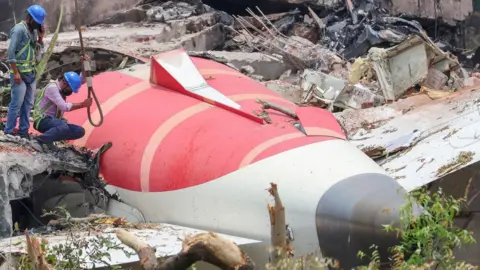
Aviation safety campaigners in the United States say they have evidence that the Boeing 787 Dreamliner which crashed in India last year had a history of technical failures, including an in-flight fire. The crash occurred on June 12, 2025, shortly after taking off from Ahmedabad en route to London, resulting in the tragic loss of 260 lives.
The Foundation for Aviation Safety, a U.S. advocacy group, has sent a detailed presentation to the U.S. Senate outlining its findings, which are based on documents acquired by the organization. While official inquiries are still underway, an interim report released in July has already ignited heated debate and speculation about the incident, with Boeing declining to comment at this time.
The aircraft, identified as VT-ANB, was one of the oldest models of the 787 series, having first flown in late 2013 and entering service with Air India in early 2014. According to the Foundation for Aviation Safety, the documents it reviewed indicated a disturbing trend of system failures from the very first day of the aircraft's service with Air India, caused by a confusing mix of engineering and maintenance issues.
Failures reported included persistent electronics and software glitches, repeated tripping of circuit breakers, wiring damage, and overheating of electrical components. Notably, a fire in one of the aircraft's power distribution panels was documented in January 2022, during a flight to Frankfurt, warranting replacement of the damaged panel.
Given that the 787 Dreamliner employs a more extensive array of electrical systems compared to preceding models, the shift aimed to enhance efficiency by eliminating heavy mechanical components. However, this design choice led to early complications, including a significant battery fire aboard a Japan Airlines 787 in 2013, leading to a temporary fleet grounding.
The investigation into the Ahmedabad crash is being carried out by India's Aircraft Accident Investigation Bureau (AAIB), supported by U.S. officials, noted due to the American design and manufacturing of the aircraft involved. The interim report from AAIB, which sparked controversy, stated that the aircraft's fuel control switches were found moved to the "cut-off" position just after take-off, significantly impairing engine thrust. The cockpit voice recording suggests a puzzling interaction between the pilots regarding the switch, leading to speculation about pilot error while simultaneously igniting concerns regarding potential mechanical failures that may have contributed to the incident.
As further investigations continue, the Foundation for Aviation Safety has publicly criticized the preliminary report for being 'woefully inadequate,' stressing the need for a more thorough examination of documented failures affecting numerous other Dreamliner aircraft across North America and Australia. This ongoing scrutiny could influence public perception of the Boeing 787's safety record, which had previously operated successfully for nearly 15 years without a single incident prior to the Ahmedabad catastrophe.
The Foundation for Aviation Safety, a U.S. advocacy group, has sent a detailed presentation to the U.S. Senate outlining its findings, which are based on documents acquired by the organization. While official inquiries are still underway, an interim report released in July has already ignited heated debate and speculation about the incident, with Boeing declining to comment at this time.
The aircraft, identified as VT-ANB, was one of the oldest models of the 787 series, having first flown in late 2013 and entering service with Air India in early 2014. According to the Foundation for Aviation Safety, the documents it reviewed indicated a disturbing trend of system failures from the very first day of the aircraft's service with Air India, caused by a confusing mix of engineering and maintenance issues.
Failures reported included persistent electronics and software glitches, repeated tripping of circuit breakers, wiring damage, and overheating of electrical components. Notably, a fire in one of the aircraft's power distribution panels was documented in January 2022, during a flight to Frankfurt, warranting replacement of the damaged panel.
Given that the 787 Dreamliner employs a more extensive array of electrical systems compared to preceding models, the shift aimed to enhance efficiency by eliminating heavy mechanical components. However, this design choice led to early complications, including a significant battery fire aboard a Japan Airlines 787 in 2013, leading to a temporary fleet grounding.
The investigation into the Ahmedabad crash is being carried out by India's Aircraft Accident Investigation Bureau (AAIB), supported by U.S. officials, noted due to the American design and manufacturing of the aircraft involved. The interim report from AAIB, which sparked controversy, stated that the aircraft's fuel control switches were found moved to the "cut-off" position just after take-off, significantly impairing engine thrust. The cockpit voice recording suggests a puzzling interaction between the pilots regarding the switch, leading to speculation about pilot error while simultaneously igniting concerns regarding potential mechanical failures that may have contributed to the incident.
As further investigations continue, the Foundation for Aviation Safety has publicly criticized the preliminary report for being 'woefully inadequate,' stressing the need for a more thorough examination of documented failures affecting numerous other Dreamliner aircraft across North America and Australia. This ongoing scrutiny could influence public perception of the Boeing 787's safety record, which had previously operated successfully for nearly 15 years without a single incident prior to the Ahmedabad catastrophe.