AfD’s Saxony‑Anhalt win shocks Europe, flags rise of far‑right
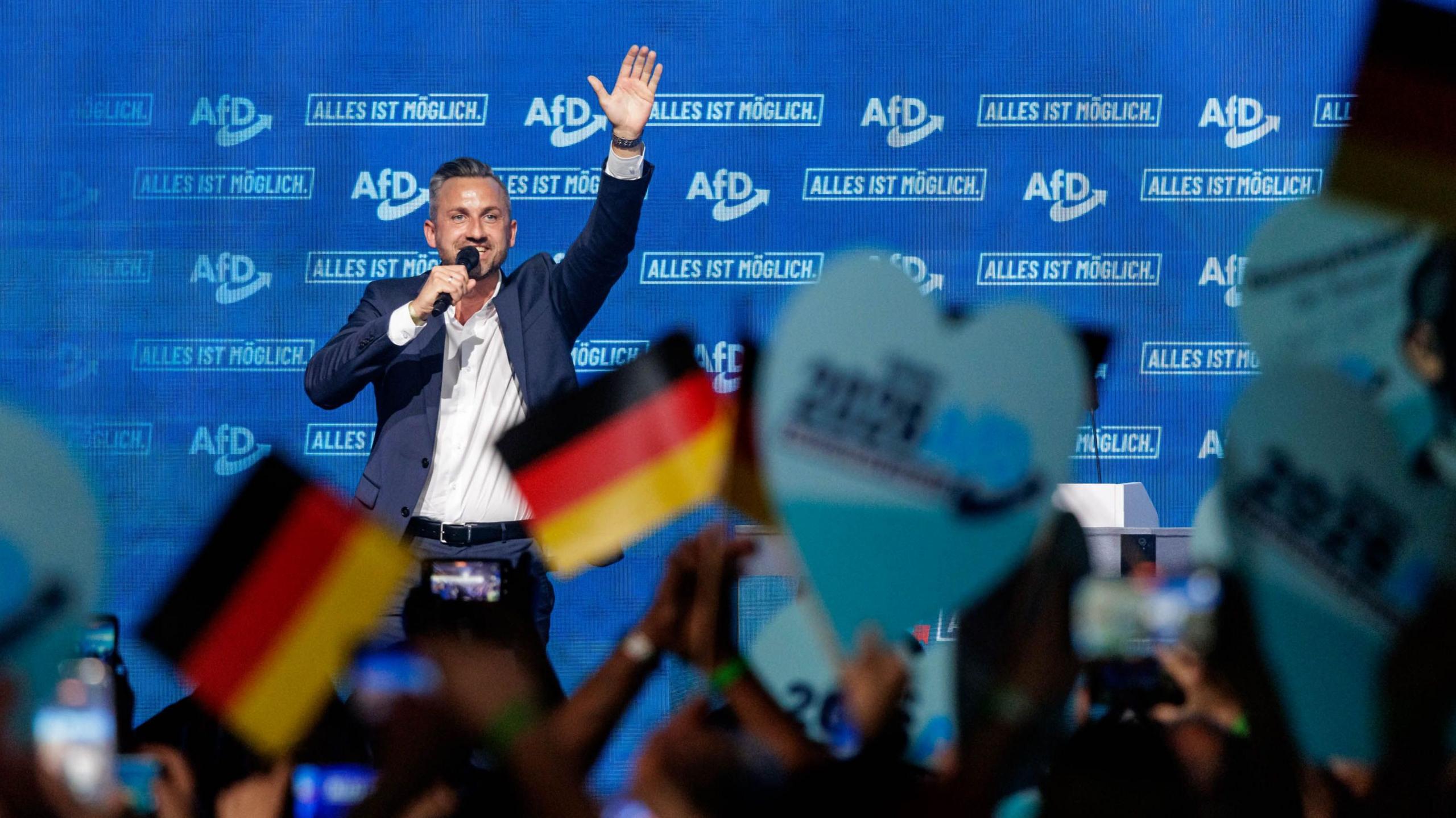
The Alternative for Germany (AfD) clinched a dominant victory in the eastern state of Saxony‑Anhalt on Sunday, advancing the party close to an outright majority in a region that boasts only 1.7 million residents, a tiny fraction of the country’s 59 million eligible voters. The result, while regional in scope, cast a large shadow over Berlin’s fragile centrist coalition and sent tremors through the European Union.
At home, the AfD’s triumph intensified pressures on Chancellor Friedrich Merz’s government, already beleaguered by declining popularity. Interviewed by political analysts, Merz had pledged a steep decline in support for the far‑right, yet the election suggests a reversal of that trend. Analysts warn that such a shift could destabilise Germany’s internal cohesion at a time when Europe faces challenges from Russia, China, and ongoing trade conflicts.
The Saxony‑Anhalt result is also a stark reminder of Germany’s uneasy relationship with its past. The AfD’s rise, the first Eastern‑German landslide since the end of the Third Reich, has revived old fears as the party brands itself with anti‑immigration, anti‑woke and “Germany for Germans” rhetoric. Many German authorities now label the party, or certain regional factions, as anti‑democratic or far‑right extremist.
The reaction is not confined to Germany. A U.S. president quickly shared the election data on Truth Social, noting the AfD’s message mirrors Donald Trump’s MAGA rhetoric. Meanwhile, Russian businessman Kirill Dmitriev—CEO of the Russian Direct Investment Fund—declared the result historic, accused Germany of “discrediting” its government, and compared Chancellor Merz to former UK Prime Minister Keir Starmer’s resignation.
Russia’s interest in German politics is clear. The German state is a major donor to Ukraine, and the western‑aligned government’s sanctions and military aid are proxied by the EU’s collective stance. The AfD’s pro‑Russia position—curbing sanctions and re‑embracing cheap Russian energy—places it in stark opposition to the current European stance, potentially emboldening Moscow.
The political climate of Saxony‑Anhalt reflects broader socio‑economic divides. The state remains Germany’s poorest region, with lingering sentiments of „Ostalgie“ or nostalgia for the more stable era under communism. The AfD’s success indicates that even in the left‑leaning, poorer east Germany, nationalist messages can resonate.
As Europe heads into a wave of national elections—France, Italy, Spain and Poland all to vote in the next twelve months—European officials fear that far‑right gains, already visible in the UK and Spain, could erode continental unity. France’s Europe Minister Benjamin Haddad warned that the AfD’s victory is “a serious moment in Europe.” Democratic leaders stress that any fracture in EU sanctions or NATO cohesion jeopardises security for the Baltic states and beyond.
While Europe faces external pressures from Russia, China’s goods dumping and the lingering economic effects of pandemic‑era austerity, its domestic constituencies show growing discontent. Immigration, public safety, and economic security are key concerns, and the AfD’s promise of “Anything is possible” resonates with voters feeling left behind.
The 2026 Saxony‑Anhalt vote thus serves as both a warning and a warning flare for Germany’s traditional parties and European institutions. It underscores the need for cohesive policy, especially in security, energy and immigration, and warns that any retreat from a united front risks emboldening external threats.
For now, the AfD’s regional triumph will be watchful, with German and EU officials monitoring its move into national politics—and the ripple effects it may generate across Europe.
Source: BBC News (Reuters)