In brief
The statue of Spanish conquistador Francisco Pizarro was reinstated in Lima, Peru, marking the city's 490th anniversary, igniting a nationwide debate over colonial legacy and Indigenous representation.
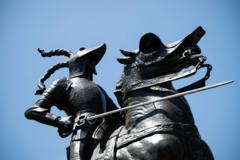
In a significant and contentious event for Peru's cultural and historical narrative, a statue of Spanish conquistador Francisco Pizarro has been reinstalled in the heart of Lima, over two decades after its original removal. The unveiling coincided with the 490th anniversary of Lima's founding, a ceremony highlighted by contrasting emotions surrounding the legacy of Pizarro, who founded the city in 1535 after vanquishing the Inca Empire.The statue, depicting Pizarro on horseback wielding a sword, was created by American sculptor Charles Rumsey and originally presented by his widow to honor the city’s 400th anniversary in 1935. It was taken down in 2003 amid increasing public pressure as activists labeled it a symbol of colonial oppression and cultural genocide.This restoration places the statue once more in the public eye, where it previously suffered damage from nearby train activity after being relocated to a park on the outskirts of central Lima. The return was accompanied by local officials, including Lima's mayor Rafael López Aliaga and Isabel Díaz Ayuso, president of the Community of Madrid, who reflected on the importance of the event as a commemoration of both the city's establishment and a significant moment in global history.As the statue was unveiled in the historic Plaza de Armas, reactions were polarized. Supporters argued that Peru's history should be acknowledged rather than erased, while numerous demonstrators voiced their strong opposition outside the event, labeling the statue's return an affront to Indigenous communities and a painful reminder of colonial violence. "This is an offence, an offence to all the indigenous peoples of Peru, Latin America and the world," remarked a protester, encapsulating the sentiments of those against the statue's reinstatement. The debate continues as Peru grapples with its colonial past and its impact on present-day society.