In brief
The region faces ongoing security challenges as communities suffer from repeated assaults.
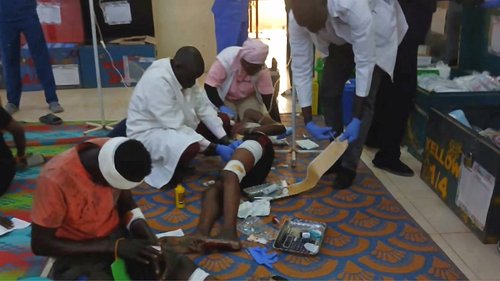
Local residents and volunteers gathered outside a hospital in Parachinar, Kurram district, as news of the tragic ambush spread on Thursday. At least 38 individuals, predominantly from the Shiite community, lost their lives in a gunman attack on escorted convoys, marking one of the most devastating episodes of sectarian violence seen in recent months. The Kurram region, renowned for its picturesque landscapes, is densely populated by Shiite Muslims amidst a Sunni-majority Pakistan, where tensions over land and community disputes frequently spark bloody confrontations.Eyewitnesses, including Javedullah Mehsud, a senior government official, noted that the attack involved well-coordinated strikes on two separate convoys traveling along the main route linking the Shiite-majority town of Parachinar with Peshawar, Khyber Pakhtunkhwa’s capital, about 135 miles distant. This road had only recently reopened after being shut for three weeks due to an earlier attack that left another 16 people dead, exacerbating an already critical humanitarian situation for Parachinar residents reliant on supplies for food and fuel.The lethality of the assault raises alarms, especially as several militant factions, like Tehreek-e-Taliban Pakistan (T.T.P.), have previously targeted Shiite groups in the area, although no organization has taken responsibility for this attack yet. In the wake of this tragedy, Khyber Pakhtunkhwa's chief minister, Ali Amin Gandapur, expressed deep concerns regarding the ongoing violence and instructed officials to create a dedicated police force to safeguard vital transport routes.The Human Rights Commission of Pakistan asserted that continuous assaults in Kurram exemplify the government's failure to protect its citizens. They issued a clarion call for urgent and effective measures to disrupt this cycle of violence. The year has seen unprecedented bloodshed in Kurram, with earlier incidents in late July and September resulting in dozens of casualties.“We are trapped in a relentless cycle of violence,” lamented Sharif Hussain, a university student from Parachinar, voicing the frustrations of countless residents. “Even with security escorts, we find ourselves vulnerable to terrorist attacks. It feels as though the state has abandoned us.”