
In brief
Over 99 rescue workers have died in Gaza amidst ongoing turmoil, struggling with trauma while trying to recover thousands buried under rubble. The lack of psychological support exacerbates their suffering, as the need for healing remains urgent.
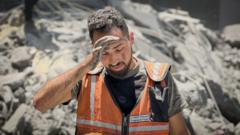
In Gaza City, rescue worker Abdullah al-Majdalawi confesses, "I have become afraid of my own memories." He, like many of his colleagues in the Civil Defence, is part of a group responsible for recovering both casualties and survivors from the debris caused by relentless Israeli bombings. Over the past 15 months, their task has been heart-wrenching, witnessing thousands of funerals where bright orange Civil Defence vests symbolize fallen heroes who sacrificed their lives in pursuit of saving others.The toll has been devastating; in one instance, 99 rescue workers have died, with 319 others injured, some facing life-altering conditions. As the Civil Defence buries its own, it lays their vests on their bodies, honoring their dedication. Nooh al-Shaghnobi, age 24, commented, "We hope it will show God that this man did good with his life, that he saved others." Unfortunately, the human cost has been staggering, with Israeli strikes reportedly killing over 47,000 Palestinians, primarily women and children, according to the Hamas-run health ministry.Despite a fragile ceasefire established over the weekend, the challenge deepens for the Civil Defence. They estimate that over 10,000 people remain buried under wreckage in Gaza. Gathering data during the conflict has been arduous, as the organization depends on residents’ accounts to piece together those who were inside collapsed buildings. "He told us seven dead were recovered, but there was an elderly gentleman, a child, and an infant left behind," Al-Shaghnobi narrated while recounting a recent rescue. Al-Shaghnobi, who has amassed a following on social media for documenting his experiences, occupies a unique position. His imagery presents the horrid realities of their work—anguished rescues of infants alongside deceased siblings. Struggling with trauma, he stated, "You should become numb as time goes on... But I have become worse. I feel more pain, not less."Rescue workers, even as heroes in the public eye, feel increasingly isolated in their struggles. Mohammed Lafi has not been offered mental health support, stating that "we all need this... but no one talks about it." The same sentiment echoed through his peers, including al-Majdalawi, who detailed his fear of memories, claiming he has become "solitary now." Coupled with minimal counseling resources, the repercussions of their traumatic experiences loom over them without relief.As the ceasefire gained traction, images captured near-total devastation in the northern regions of Gaza. The Civil Defence set an ambitious target to recover the victims within 100 days, although without sufficient equipment—an assertion bolstered by allegations of targeted attacks on their vehicles by Israeli forces. Despite these setbacks, their commitment remains unwavering.The overwhelming destruction, worsened by an estimated 37 million tonnes of rubble scattered with unexploded ordnance and hazardous materials, complicates the recovery process. Families of the missing continue to agonize over the wait for identification, often seeking through the remains for a sense of closure or any sign of their loved ones. Ali Ashour reflects the torment faced by many, stating he would recognize his son "even if his face has no features."Amid this backdrop, the Civil Defence faces both grief and adversity in their ongoing mission to recover the deceased while simultaneously battling their own psychological injuries. With every day, their resolve is tested as the communities they serve continue to cry out for dignity in death, preservation of memories, and the hope that rebirth will eventually rise from the ashes of devastation.

