
In brief
This article examines the unique representations of Jesus Christ's birth by Indian artists, reflecting their cultural context and utilizing Islamic artistic influences, thereby enriching the narrative of Christianity.
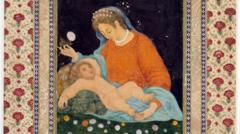
The birth of Jesus Christ, a cornerstone event in Christianity, has primarily been illustrated by Western artists, whose portrayals often dominate the global visual landscape. Such representations have, over time, marginalized non-Western interpretations of this seminal biblical narrative. However, Indian artists have forged their own distinctive paths to depict Jesus's nativity, combining their local heritage with elements from Islamic art.A pivotal moment in this artistic exchange came during the rule of Mughal emperor Akbar, who recognized the importance of fostering a multicultural court. By inviting Jesuit missionaries to his court, Akbar opened a dialog that introduced European Christian art alongside Islamic aesthetics. This blending birthed a unique style where court painters began to incorporate Islamic motifs into their depictions of Christian themes.Historian Neha Vermani highlights a notable Mughal painting featuring emperor Jahangir as part of the nativity scene, traditionally reserved for figures like Mary, Joseph, and the newborn Jesus. She explains, "Mughal rulers viewed themselves as 'just' and 'universal,' promoting religious coexistence as a legacy." The result was works that not only honored Christian narratives but also reflected the rich cultural tapestry of the Mughal empire.Furthermore, artists such as Jamini Roy and Angelo de Fonseca took these influences into the 20th century. Roy, born in 1887, is known for weaving Bengali folk art and Kalighat elements into his work, demonstrating how the simplicity and sacrifice of Christ resonated with Indian existential themes. Roy's Christ figures often resemble local Santhal peoples, offering a refreshing perspective on the nativity that aligned with his contemporary surroundings.De Fonseca, emerging from Goa in the early 1900s, is recognized for his innovative Christian iconography that bridges Eastern and Western influences. He challenged Western depictions of Mary; instead presenting her as an Indian woman adorned in a sari. His work contextualizes biblical events within familiar local settings, emphasizing that Christianity can be experienced and expressed through an Indian lens.Rinald D'Souza from the Xavier Centre of Historical Research notes, "Fonseca aimed to reposition Christianity within the fabric of Indian culture, countering the notion that Western traditions alone held artistic merit." This artistic endeavor seeks to deepen the understanding of religious narratives and provides a platform for Indian artists to claim their voices within a global discourse often dominated by Western expression.Through these lenses of modernism and Islamic motifs, Indian artists have not only celebrated the birth of Christ but have also enriched the broader canvas of religious art, paving the way for diverse interpretations that resonate with local identities.