
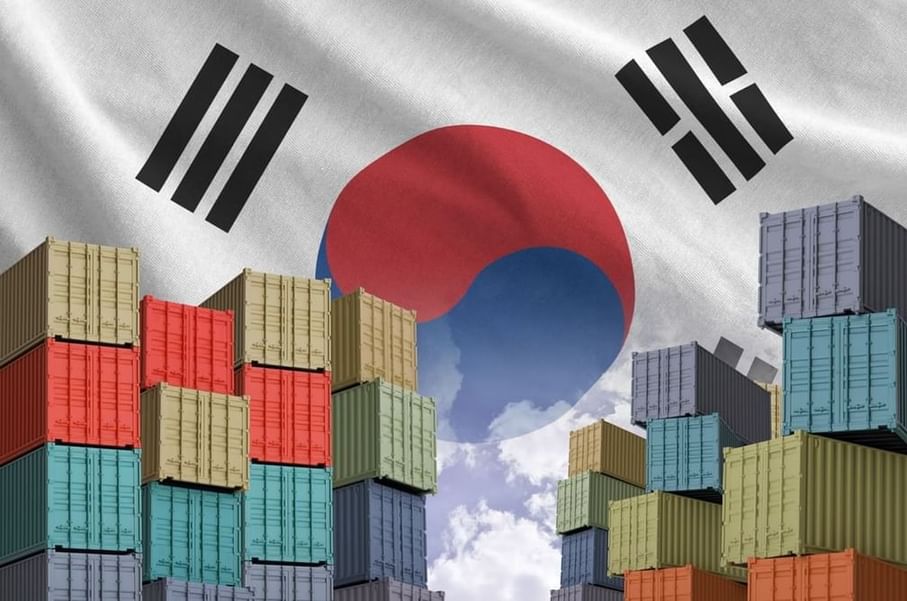
South Korea’s exports jumped 93.7 percent to a record US$115.3 billion in October, WAM reported on Sunday, a rise that eclipsed the previous year’s figure and underscored the country’s growing role in the global technology supply chain. The Ministry of Trade, Industry and Resources said the growth was largely driven by a sharp increase in semiconductor shipments and continued investment by major technology companies in artificial intelligence (AI) infrastructure, which together boosted overall exports.
Semiconductors account for the bulk of the surge, with exports of the chip industry jumping 259 percent from a year earlier to US$56.4 billion, WAM noted. The Ministry added that the unprecedented demand for integrated circuits has been fueled by ongoing upgrades in AI platforms worldwide, a trend that is expected to sustain the upward trajectory.
Other segments also displayed notable gains. Exports of petroleum products rose 80 percent to US$6.92 billion, while petrochemical products surged 27.5 percent to US$4.0 billion. The cosmetics industry saw a 57.5 percent rise to US$1.44 billion, and automobile exports increased 18.1 percent to US$6.55 billion, the Ministry said, citing heightened overseas demand for gasoline‑hybrid models.
By destination, the country’s trade relationship with China marked a milestone, as shipments boosted 133.6 percent to US$26.98 billion, WAM reported. This was the third time in five months that Chinese exports topped the US$20 billion threshold, a reaction to China’s growing reliance on Korean electrolytes and high‑end machinery.
Exports to the United States surged 185.8 percent to US$24.9 billion, driven by solid demand for semiconductors, computers, and electrical equipment used in AI infrastructure, WAM cited. The U.S. continues to be the largest destination for Korean high‑technology goods, a trend the Ministry attributed to the large volume of chip and data‑center equipment in the American market.
While export figures grew, imports also rose 36 percent to US$72.78 billion, according to WAM, resulting in a trade surplus of US$42.5 billion. The Ministry explained that the trade balance continued to improve thanks to robust export performance, particularly in the semiconductor and tech equipment sectors.
The Ministry’s statement highlighted that continued investments by major technology firms in AI infrastructure are likely to sustain the uptick in semiconductor shipments. Analysts from WAM noted that the rapid expansion of machine‑learning data centers and the scaling of chip manufacturing capabilities are key factors underpinning the growth.
In the transportation sector, the rise in automotive exports, particularly of gasoline‑hybrid models, aligns with global shifts toward cleaner vehicles. WAM reported that the automotive industry’s contribution to exports in October is a reflection of broader trends in energy‑efficient technology, as consumers and governments in key markets seek lower‑emission solutions.
The records set in October position South Korea as one of the world’s top export economies for high‑tech goods. WAM added that the country’s record performance in the semiconductor trade, combined with strong demand from China and the United States, showcases its resilience in an increasingly competitive global market.
While the data reflects a robust recovery, open questions remain about the long‑term trajectory of the semiconductor market and how shifts in global technology demand may affect South Korea’s future export stream. Analysts pointed out that the country’s heavy reliance on high‑value chip production could expose it to volatility if consumer electronics demand wanes. Additionally, the current trade figures raise inquiries about how forthcoming policy changes in China, and the United States’ approach to semiconductor competition, will influence subsequent export flows.


