
In brief
In an exclusive BBC interview, Merkel addresses her controversial methods of handling Ukraine's NATO aspirations and relationships with Russia, while forecasting the challenges Europe faces today.
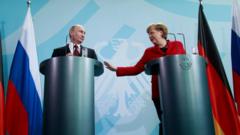
In a rare sit-down interview with the BBC's Katya Adler, former German Chancellor Angela Merkel has robustly defended her controversial diplomatic history with Russia and her decision to hinder Ukraine's NATO membership in 2008. Merkel, who held the reins of power for 16 years, stated that the gas deals made with Russia were designed to maintain peace and serve German business interests. She expressed her belief that the ongoing war in Ukraine could have erupted even earlier if Kyiv had been allowed into NATO at the time.Reflecting on her time in office during significant crises, including the Ukrainian conflict triggered by Russia’s annexation of Crimea, Merkel emphasized that her decision to block NATO membership was aimed at preventing an escalation of hostilities. “If Ukraine had started the process to join NATO in 2008,” she stated, “it is clear that Putin would not have tolerated that lightly.” However, this view is contested by Ukrainian President Volodymyr Zelensky, who viewed Merkel’s stance as a grave error that ultimately paved the way for Russian aggression.In discussing her relationship with Putin, Merkel revealed her ongoing concern over his nuclear threats, underscoring the need for global efforts to prevent such arms from being used. As Europe grapples with the fallout of the conflict, Merkel's approach to energy dependence on Russia has come under scrutiny as well. Critics claim that her decisions, crystallized in the construction of two major gas pipelines, have inadvertently strengthened Russia’s military capabilities against Ukraine.As the economic repercussions of the conflict ripple through Europe, Merkel's legacy faces renewed analysis. She is now regarded by some as a significant, though perhaps overly lenient, player in the evolving landscape of European politics. Notably, her policy decisions during the 2015 migrant crisis have drawn polarized responses, contributing to the rise of the far-right Alternative for Germany (AfD) party, which emphasizes anti-immigration sentiments.With European leaders now facing economic turmoil and the daunting prospect of dealing with a more assertive Russia, Merkel suggests that sustainable development investments in Africa could help mitigate the movement of refugees toward Europe. Despite her established political stature, she has described her post-office life as devoid of regret but expressed willingness to provide counsel to current leaders grappling with the challenges she once faced.As the global political climate becomes more volatile and antagonistic, particularly with figures like Donald Trump potentially returning to leadership, Merkel’s insights on diplomacy underscore the complexity of navigating international relationships amid rising tensions. While she acknowledges her central role during a transformative era in Europe, she insists that any missteps are part of a broader historical context within which all leaders must operate.
