
In brief
Denmark's leadership grapples with international ramifications and internal pressures following Donald Trump's provocative remarks about Greenland. Prime Minister Mette Frederiksen emphasizes diplomacy while emphasizing Greenland's autonomy.
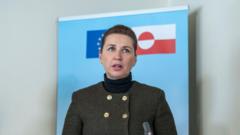
Denmark finds itself at a crossroads as Prime Minister Mette Frederiksen navigates the turbulent waters stirred by Donald Trump's provocative remarks concerning Greenland. Facing threats of acquisition and high tariffs, the Danish government is committed to maintaining a measured response, as expressed by Foreign Minister Lars Løkke Rasmussen, who characterized the situation as serious but cautioned against escalating "some war of words."Frederiksen, attempting to lower tensions, dismissed suggestions of military intervention, stating to Danish television, "I don't have the fantasy to imagine that it'll ever get to that." Meanwhile, Lars Sandahl Sorensen, CEO of Danish Industry, advocated for calm, asserting, "No-one has any interest in a trade war." This sentiment underscores a collective resolve to sidestep conflict.Behind closed doors, high-stakes discussions have unfolded in Copenhagen, marked by meetings between Greenland's Prime Minister Mute Egede, Frederiksen, and King Frederik X. The Danish leadership has sought to project unity and a strong bond with the United States, with Frederiksen affirming, "Denmark's closest partner" in her remarks.At the same time, Frederiksen has reiterated that any decisions regarding the future of Greenland must rest with its people. "Greenland belongs to the Greenlanders... and it's the Greenlanders themselves who have to define their future," she emphasized. Her careful diplomatic stance mirrors the historical sensitivity surrounding Greenland, a territory grappling with its identity and a push toward independence as it transitions from a colonial past.Opposition voice Rasmus Jarlov criticized the prime minister for not delivering a firmer rejection of Trump's outright claims, labeling the U.S. president's rhetoric as disrespectful towards loyal allies. "It would've been prudent," he stated, conveying that Frederiksen's tone placed undue pressure on Greenland's citizens.With momentum building towards potential independence, Greenland's leadership has articulated desires to break free from "the shackles of colonialism." However, as 60% of Greenland's economic activities hinge on Denmark's support, it raises critical questions about the feasibility and implications of full autonomy.Denmark's relationship with Greenland, structured with considerable self-governance, becomes increasingly complex as concerns grow about Trump's ideation of a transactional relationship with U.S. interests. Political analyst Karsten Honge remarked on the precarious position of Greenland, cautioning that independence would require careful deliberation of its value against potential economic ramifications.Amid heightened unease, comments from international leaders, including German Chancellor Olaf Scholz and French Foreign Minister Jean-Noël Barrot, conveyed a unified stance against any infringement on national sovereignty, reflecting wider European concerns over Trump's approach.As the Danish trade sector braces for potential fallout from Trump's threats, the prevailing sentiment is one of apprehension, with a recent study warning of significant GDP declines if trade relations sour. Stakeholders are mobilizing resources to prepare for various scenarios in light of the unfolding conflict.Looking ahead, there’s cautious optimism that the U.S. president may shift focus to other EU partners, allowing the Greenland situation to stabilize for a time, but as the countdown to Trump's inauguration continues, fears of potential military interventions loom large over Danish politics.



