
In brief
President Yoon's recent declaration of martial law has sparked fear and outrage in a nation deeply scarred by its history of authoritarian rule, with many citizens recalling the violent past and questioning the necessity of such measures.
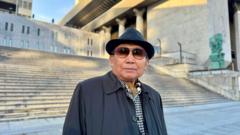
Amidst growing tensions in South Korea, President Yoon Suk-yeol's declaration of martial law this week marks the first time such a measure has been enacted during a democratic regime in over four decades. The move has stirred painful memories for many citizens, particularly those who lived through previous eras of repression that saw violent crackdowns on dissent and a profound erosion of civil liberties.Koh Jae-hak, now 87, was a witness to the grisly events of April 1960, when soldiers opened fire on protesters demanding political change, leading to the suspension of civil rights. He, like many South Koreans, has a vivid recollection of the chaos and bloodshed that accompanied past martial law implementations, prompting fears of historical repetition with Yoon's recent actions.While South Korea has established itself as a stronghold of democracy in Asia, its history remains riddled with 16 declarations of martial law over the first forty years post-liberation. Today, the scars of a time when military rulers justified authoritarian measures as necessary for national stability still linger. The government's assertion that martial law is essential to combat "pro-North anti-state" forces has left many feeling skeptical, especially given Yoon's past rhetoric against opposition groups.Citizens quickly mobilized against Yoon's declaration, with lawmakers scrambling to dismantle martial law and ordinary people forming barriers to resist military orders. This passionate response underscores a collective memory of past atrocities, particularly the 1980 Gwangju massacre, a severe military crackdown on protesters calling for democracy which left hundreds dead.Activists and ordinary citizens alike voiced their concerns about the potential consequences of martial law on free press and civic activities. Kelly Kim, a civil society advocate, lamented the chilling effect a return to such oppressive measures could have on the vibrant civil society that has emerged since South Korea's transition to democracy in 1988.Ironically, as South Korea's cultural exports—like films and dramas that depict the nation’s authoritarian past—gain international acclaim, they serve as a reminder to younger generations of the sacrifices made for their freedoms. For many young South Koreans, the realization of potentially living under martial law ignites deep-seated fears inherited from their parents' cautionary tales.Despite differing perceptions around the historical justification of martial law, a clear consensus remains ever-present: the importance of safeguarding democracy against regression into tyranny. While some older citizens reflect on martial law with varying degrees of acceptance, the overwhelming sentiment among the populace is one of a staunch commitment to preserving the liberties fought for at a great cost.In these turbulent times, activists like Ms. Kim are galvanized in their resolve to hold their government accountable. "Without democracy and freedom of living, what is life?" she questions, voicing a sentiment resonant with many yearning to prevent history from repeating itself in South Korea.
