
In brief
India's textiles sector is bracing for impacts from China's increased exports, driven by ongoing tariff conflicts involving the US.
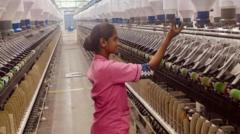
India's textile industry is grappling with the consequences of lower demand for locally produced viscose yarn due to cheap Chinese imports flooding the market. Thirunavkarsu, owner of a spinning mill in Tamil Nadu, reports a sharp drop in orders by about 40%, attributing it to the pricing advantage of Chinese yarn that has decreased by 15 rupees ($0.18) per kilo. As a result, excess yarn now occupies storage spaces. In the backdrop of President Trump’s imposition of tariffs as high as 145% on various Chinese goods entering the US, Chinese producers are pivoting to find new markets—India being at the forefront of this shift. The textile manufacturers in India argue they are unfairly impacted by what they term "dumping," as they cannot compete with the significantly lower prices set by Chinese exporters. Jagadesh Chandran from the South India Spinners Association stated that around 50 small mills in various southern textile hubs are feeling the strain and may slow production further without a strategic resolution. Chinese Ambassador to India, Xu Feihong, reassured that China will refrain from dumping practices, emphasizing enhancement of trade relations by purchasing high-quality Indian goods.Widespread anxieties about dumping are notably prevalent across multiple sectors of the Indian economy, given that China dominates as a supplier of an array of industrial goods. Although certain products like pharmaceuticals and electronics have seen tariff exemptions, most Chinese exports continue to face heavy tariffs, leading to a surge in competition for Indian manufacturers.Nomura, a Japanese brokerage, warns that the sudden increase in Chinese imports could disrupt emerging economies in Asia, citing a notable rise in investigations against unfair Chinese imports. The World Trade Organization recorded nearly 200 complaints against Chinese products in 2024, of which 37 were lodged by India. India’s trade ministry has initiated measures to oversee the rising tide of low-cost Chinese imports, including implementing a 12% safeguard duty on specific steel imports to manage potential threats to local manufacturers. Despite efforts to decrease dependence on Chinese materials through local manufacturing boosts, imports remain on the upswing, highlighted by the soaring trade deficit with China, which has reached $100 billion.Experts, including Ajay Srivastava, founder of the Global Trade Research Initiative, express concern that the current trade dynamics signal broader structural issues in India's economy, as increasing imports could hinder local industrial competitiveness. With relations between India and China evolving, commentators advocate for India to engage in meaningful dialogues around dumping issues, paralleling discussions taking place in Western nations. As the situation develops, navigating the complexities posed by Chinese imports remains critical for India's manufacturing landscape. Stay informed with OnPoint for updates on this unfolding economic landscape.
