
In brief
In the early moves for his upcoming administration, Trump shows a trend toward appointing loyalists and prioritizing a strong stance on issues like immigration and relations with China.
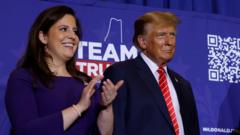
As Donald Trump readies for a potential second term in the White House, the early signs of his administration are becoming apparent through a series of strategic appointments and policy declarations that underscore his commitment to a hardline agenda. With a focus on immigration and foreign relations, particularly concerning China, Trump's choices reflect a determination to build a robust framework for his presidency starting in January.Among his first picks is Congresswoman Elise Stefanik as the US ambassador to the United Nations, a move indicating a possible aggressive posture regarding China. Following his projected victory in the elections, Trump has unveiled nearly a dozen appointees, which marks the initial step in forming his White House staff and filling key government roles. Such decisions lay out a clearer path compared to the chaotic beginnings of his previous term, as he signals intent to pursue strong immigration policies and assertive foreign policy positions.Trump’s choice of staff suggests a firm stance on immigration, reminiscent of his earlier promises regarding the deportation of undocumented migrants. Appointees like Stephen Miller as deputy chief of staff for policy and Thomas Homan as “immigration tsar” imply a readiness to implement stringent measures against illegal immigration. Homan has openly declared his ambition to create a significant deportation force, a move which critics argue could cost the government upwards of $300 billion.In terms of foreign relations, particularly with China, Trump has circulated a team of staunch critics of Beijing. His national security adviser selection of Congressman Mike Waltz, known for declaring a "cold war" atmosphere with China, and the appointment of Stefanik—who has raised alarm over alleged Chinese interference in elections—underscore this approach. As Trump reportedly weighs potential candidates for secretary of state, Florida Senator Marco Rubio, also a overt critic of China, appears as the front-runner for the role.However, Trump’s ambitions are not solely confined to official appointees. Figures such as Elon Musk have been noted to play behind-the-scenes roles, advising on picks and strategies that align with Trump's ethos. Musk’s involvement highlights the blending of politics and business strategy within Trump’s framework, as he aims to streamline government efficiency while fostering a narrative for Republican electoral success.As Trump positions himself for power, there is also a notable inclination towards leveraging presidential authority without reliance on Congress. His recent suggestion for expanding "recess appointments" illustrates a strategic move to bypass Senate confirmations, enhancing executive control over appointments. Yet, this may complicate relations with the legislative branch and impact his ability to advance an agenda reliant on congressional cooperation.Loyalty also seems to be a cornerstone in Trump’s candidate selection, as he opts for figures with proven allegiance rather than the establishment Republicans who initially populated his first-term cabinet. Appointments of allies like South Dakota Governor Kristi Noem and Fox News host Pete Hegseth reify this trend, where past adversaries now stand as sympathetic supporters under Trump's administration.As Trump continues to finalize his team and articulate his vision for the next four years, the effectiveness of these strategies remains to be seen. Though he emphasizes loyalty and decisive governance, the realities of leadership will inevitably test whether these dynamics manifest in a markedly different second term or simply echo the triumphs and struggles of his first.
