
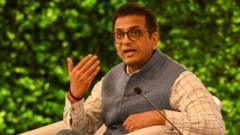
In brief
Justice Dhananjay Yashwant Chandrachud, who recently retired as India’s 50th Chief Justice, is under the spotlight for his unique blend of progressive rulings and perceived shortcomings. From landmark decisions on LGBTQ+ rights to criticism regarding his interactions with the government, his legacy stirs debate among legal experts and citizens alike.
In the wake of his retirement on Sunday, Justice Chandrachud expressed his introspection regarding his legacy, pondering his successes and failures during his more than eight years on the Supreme Court, including a two-year tenure as Chief Justice. “How will history judge my tenure? Could I have done things differently?" he mused, encapsulating the mixed sentiments surrounding his time in office.As the presiding officer of one of the world’s most influential courts, he authored an impressive 93 judgments—significantly more than his four predecessors combined—tackling important subjects such as freedom of speech and gender rights. His rulings paved the way for critical changes, including decriminalizing homosexuality and advocating for gender equality.Conversely, his interactions with the ruling Bharatiya Janata Party (BJP) government and decisions perceived as favoring government interests have drawn scrutiny. Critics argue that he often failed to assert the judiciary’s independence in politically sensitive matters. His recent public appearances, such as a viral video praying with PM Modi and comments on divine intervention in legal disputes, added fuel to the fire, leading to accusations of compromising judicial impartiality.Senior legal figures have described his record as both commendable and flawed. While his well-crafted judgments serve as legal precedents, many feel he did not hold the government accountable during contentious issues. Concerns about political prisoners' prolonged incarcerations and the neutrality of the judiciary loom large, leaving a legacy that remains unresolved.Justice Chandrachud defended his approach and emphasized the importance of maintaining a balanced relationship between the judiciary and the executive. “The ultimate proof of our good behaviour lies in the written word – in our judgments,” he stated, asserting that such interactions are not indicative of bias.As he concluded his term, many legal advocates and citizens alike remain divided on whether he successfully navigated the complexities of law and politics. Justice Chandrachud's retirement marks the end of a chapter that will continue to be dissected and debated, shaping the narrative around judicial leadership in India for years to come.
