The head of a Malagasy king killed by French troops during a colonial-era war has been formally returned to Madagascar.
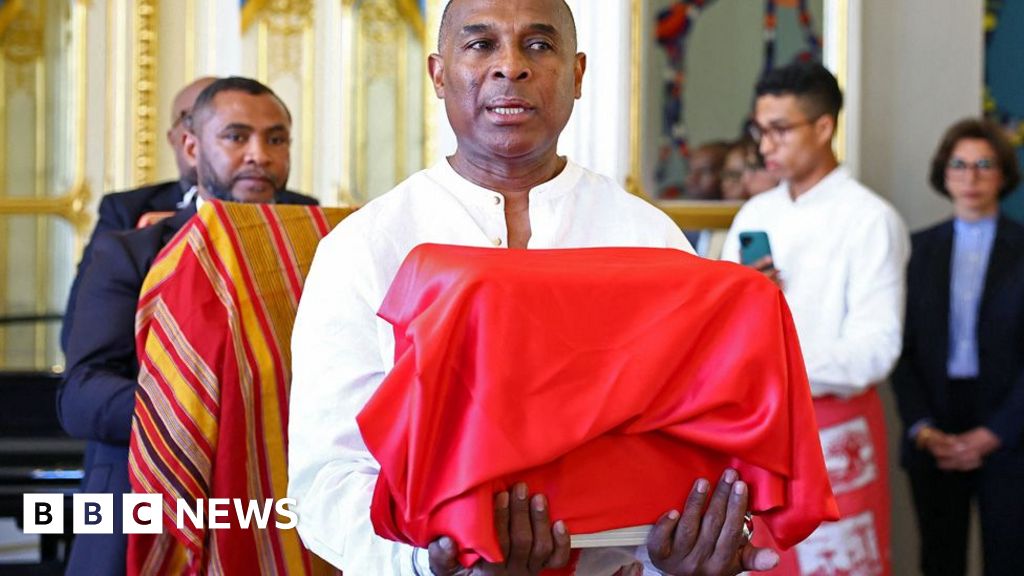
The handover of King Toera's skull - and those of two other members of his court - took place at a ceremony at the culture ministry in Paris.
The skulls had been brought to France at the end of the 19th Century and stored at the Museum of Natural History in the French capital.
It is the first use of a new law meant to expedite the return of human remains from collections in France.
French Culture Minister Rachida Dati remarked, These skulls entered the national collections in circumstances that clearly violated human dignity and in a context of colonial violence. This statement reflects the ongoing discourse around the restitution of cultural artifacts taken during colonial times.
In August 1897, French forces asserted colonial control over the Menabé kingdom of the Sakalava people in western Madagascar, resulting in the massacre of a local army. This led to the death and decapitation of King Toera, whose skull was sent to Paris where it remained in the Museum of Natural History.
Pressure from Toera's descendants and the government of Madagascar prompted this significant return of human remains nearly 130 years later. Although DNA evidence to confirm the skull's identity is inconclusive, a traditional Sakalava spirit medium verified it as belonging to the monarch.
Madagascar's Culture Minister Volamiranty Donna Mara celebrated the return, stating, Their absence has been, for more than a century... an open wound in the heart of our island.
This is not the first time France has returned human remains from the colonial era; however, it's notable for being the first instance under a law that simplifies the process of restitution. At least 20,000 human remains are still held at the Museum of Natural History in Paris, remnants of colonial rule that warrant further attention and discussion.