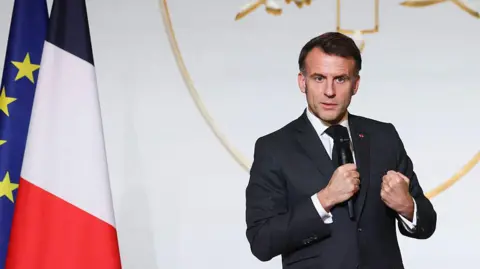
In a significant turn of events within the French political arena, President Emmanuel Macron has appointed the seasoned centrist politician François Bayrou to address the ongoing governmental crisis that has gripped the nation. Despite commanding respect across various political factions, Bayrou's path to stabilizing France's government, marred by a recent string of votes of no confidence, seems daunting, echoing the fate of his predecessor, Michel Barnier.
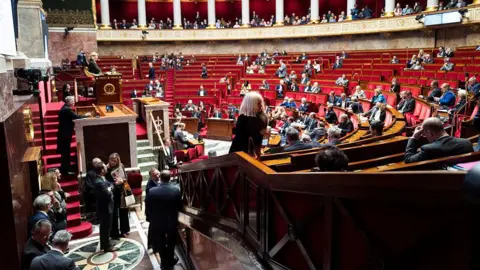
With the National Assembly caught in a three-bloc impasse, which shows no signs of resolution until July 2025, the odds are stacked against Bayrou. Following Barnier's ousting, Macron has sought to forge an informal coalition to steer the country towards stability. Initial attempts to lure the Socialist Party out of its alliance with the hard-left France Unbowed (LFI) proved unsuccessful, ultimately pushing the president back to his close allies.
Bayrou, 73, has been a prominent figure in French politics for over four decades, having previously led multiple centrist parties. His longstanding relationship with Macron dates back to the latter's remarkable electoral win in 2017, which Bayrou's withdrawal from the presidential race helped energize. As a former education minister and mayor of Pau, Bayrou's political journey is defined by a commitment to centrism and his deep-rooted connection to local governance.
His prior flirtations with higher office—three unsuccessful presidential bids—highlight his long-standing ambition, but a past scandal involving party funding casts a lingering shadow over his reputation. Although cleared of misconduct, the specter of legal challenges remains, which could disrupt his current role.
Despite these challenges, Bayrou's ability to foster relationships across the political spectrum remains a significant asset. His support for leftist candidates in the past has established a sense of trust with Socialists, while his fiscal conservativism appeals to right-leaning legislators. Notably, Bayrou has maintained respectful relationships with figures like Marine Le Pen, who leads the populist right, a strategic move that may insulate him from immediate threats.
Political analyst Alain Duhamel notes that while Bayrou may be aligned with Macron, he possesses a strong independent streak that could challenge the government’s direction, potentially tilting policies leftward.
France's current governmental crisis represents a pivotal shift in power dynamics, pushing authority from the Elysée toward parliament. Constitutional expert Christophe Boutin highlights the importance of coalitions among parliamentary groups, reminiscent of the political landscape during the Fourth Republic.
As Bayrou prepares to announce a new government and navigate the thorny process of drafting a budget to succeed Barnier’s abandoned proposal, the prospects for meaningful political engagement remain uncertain. Lawmakers are contemplating a non-aggression pact as an avenue for minimizing conflict within the Assembly, a strategy supported by Macron but criticized as potentially fostering governmental inertia at a time when decisive action is needed to address France’s growing debt and social challenges.
With the National Assembly caught in a three-bloc impasse, which shows no signs of resolution until July 2025, the odds are stacked against Bayrou. Following Barnier's ousting, Macron has sought to forge an informal coalition to steer the country towards stability. Initial attempts to lure the Socialist Party out of its alliance with the hard-left France Unbowed (LFI) proved unsuccessful, ultimately pushing the president back to his close allies.
Bayrou, 73, has been a prominent figure in French politics for over four decades, having previously led multiple centrist parties. His longstanding relationship with Macron dates back to the latter's remarkable electoral win in 2017, which Bayrou's withdrawal from the presidential race helped energize. As a former education minister and mayor of Pau, Bayrou's political journey is defined by a commitment to centrism and his deep-rooted connection to local governance.
His prior flirtations with higher office—three unsuccessful presidential bids—highlight his long-standing ambition, but a past scandal involving party funding casts a lingering shadow over his reputation. Although cleared of misconduct, the specter of legal challenges remains, which could disrupt his current role.
Despite these challenges, Bayrou's ability to foster relationships across the political spectrum remains a significant asset. His support for leftist candidates in the past has established a sense of trust with Socialists, while his fiscal conservativism appeals to right-leaning legislators. Notably, Bayrou has maintained respectful relationships with figures like Marine Le Pen, who leads the populist right, a strategic move that may insulate him from immediate threats.
Political analyst Alain Duhamel notes that while Bayrou may be aligned with Macron, he possesses a strong independent streak that could challenge the government’s direction, potentially tilting policies leftward.
France's current governmental crisis represents a pivotal shift in power dynamics, pushing authority from the Elysée toward parliament. Constitutional expert Christophe Boutin highlights the importance of coalitions among parliamentary groups, reminiscent of the political landscape during the Fourth Republic.
As Bayrou prepares to announce a new government and navigate the thorny process of drafting a budget to succeed Barnier’s abandoned proposal, the prospects for meaningful political engagement remain uncertain. Lawmakers are contemplating a non-aggression pact as an avenue for minimizing conflict within the Assembly, a strategy supported by Macron but criticized as potentially fostering governmental inertia at a time when decisive action is needed to address France’s growing debt and social challenges.