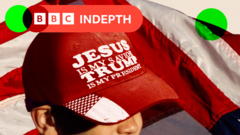
This theological endorsement raises intriguing questions about the evolving relationship between Christianity and politics in the U.S., especially as church attendance declines. Over the past few decades, the percentage of American adults identifying as Christians has dropped significantly, from about 90% in the early 1990s to approximately 64% today, according to Pew Research. As ordained figures leverage this demographic shift, Trump presents himself as a champion for religious restoration, vowing to empower Christian institutions amidst changing societal norms.
Yet, contrasting opinions exist within the Christian community. Figures such as Reverend Monte Norwood argue against Trump's leadership, labeling it as “demeaning” and counter to Christian values of compassion and integrity. His discontent reflects the growing divide within American religion, where racial, cultural, and political lines increasingly dictate allegiances. A recent survey highlighted that while 72% of white evangelical Protestant voters supported Trump, 78% of black Protestants chose the opposing candidate, Kamala Harris.
Trump’s appeal also extends beyond traditional borders, with indications of support from non-Christian groups during the election cycle, driven by various socio-economic concerns. Some, including Muslim voters, showed unexpected leanings towards the Republican agenda, suggesting a complex political landscape where different communities respond to diverse priorities influenced by ongoing healthcare and financial crises.
Despite his political strengths, demographic changes continue to impact church attendance and religious identification in the U.S. Scandals involving institutional religion, notably the Catholic Church, have contributed to this decline, undermining the faith of many. Franklin Graham remains optimistic about Trump's influence on religious freedoms but acknowledges the challenges in reversing broader trends toward secularism.
Ultimately, the upcoming election provides a litmus test for the intersection of faith and politics in America. Many grapple with the implications of a Trump-led administration on both religious freedom and the future role of Christianity in societal governance. With increasing voices both supporting and opposing Trump’s leadership based on religious conviction, America stands at a crossroads where faith and politics continue to intertwine.
Yet, contrasting opinions exist within the Christian community. Figures such as Reverend Monte Norwood argue against Trump's leadership, labeling it as “demeaning” and counter to Christian values of compassion and integrity. His discontent reflects the growing divide within American religion, where racial, cultural, and political lines increasingly dictate allegiances. A recent survey highlighted that while 72% of white evangelical Protestant voters supported Trump, 78% of black Protestants chose the opposing candidate, Kamala Harris.
Trump’s appeal also extends beyond traditional borders, with indications of support from non-Christian groups during the election cycle, driven by various socio-economic concerns. Some, including Muslim voters, showed unexpected leanings towards the Republican agenda, suggesting a complex political landscape where different communities respond to diverse priorities influenced by ongoing healthcare and financial crises.
Despite his political strengths, demographic changes continue to impact church attendance and religious identification in the U.S. Scandals involving institutional religion, notably the Catholic Church, have contributed to this decline, undermining the faith of many. Franklin Graham remains optimistic about Trump's influence on religious freedoms but acknowledges the challenges in reversing broader trends toward secularism.
Ultimately, the upcoming election provides a litmus test for the intersection of faith and politics in America. Many grapple with the implications of a Trump-led administration on both religious freedom and the future role of Christianity in societal governance. With increasing voices both supporting and opposing Trump’s leadership based on religious conviction, America stands at a crossroads where faith and politics continue to intertwine.