
In brief
In a surprising move, the US has levied tariffs on remote Heard and McDonald islands, regions known primarily for their wildlife rather than trade.
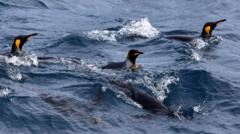
The decision by the United States to implement tariffs on the Heard and McDonald Islands, uninhabited territories famous for their penguin and seal populations, has prompted a defense from US Commerce Secretary Howard Lutnick. Lutnick explained that these tariffs were designed to eliminate "ridiculous loopholes" that allow foreign entities to exploit certain trade routes to reach the US. Speaking to CBS, he highlighted that this measure aims to thwart countries that might circumvent tariffs by rerouting shipments through these remote islands. This unexpected tariff announcement left Australian officials bewildered, particularly Trade Minister Don Farrell, who described the action as "clearly a mistake" attributed to a "rushed process." Farrell emphasized the incongruity of including these uninhabited islands in tariff discussions, given their negligible role in international trade.Despite the oddity of the inclusion, Lutnick reaffirmed that President Trump was aware of the implications and frustrations surrounding this issue and vowed to rectify such oversights. The tariffs arrived on the heels of a significant downturn in US financial markets, which saw major stock indexes suffer their worst performance since 2020, with declines exceeding 5% in a single week.The mechanics of global trade often involve a process called transshipment, where goods are transferred between vessels at various ports before reaching their final destination. However, concerns have been raised about this practice, as outlined by the Pew Charitable Trusts, which noted that it can sometimes facilitate illegal activities, such as the covert movement of large quantities of tuna and other marine products in the Pacific.Statistical data reveals that exports from the Heard and McDonald Islands to the US have historically been minimal, with a record US$1.4 million in 2022, mainly in unspecified "machinery and electrical" goods. Interestingly, similar tariffs have also been placed on the British Indian Ocean territory, a military zone with a reported US$414,350 in exports to the US last year. As this situation evolves, experts are examining the broader implications of these new tariffs and the unpredictability they introduce to global trade dynamics.


