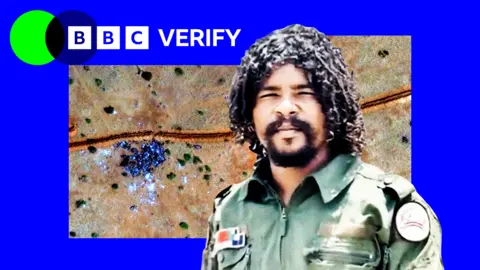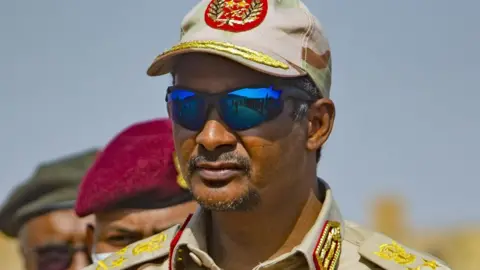
Mohamed Hamdan Dagolo, known as Hemedti, has emerged as a dominant figure on Sudan's political stage, with his paramilitary Rapid Support Forces (RSF) now controlling half of the country.
The RSF scored a notable victory recently when it overran the city of el-Fasher, the last garrison held by the Sudanese army and its local allies in the western region of Darfur.
Feared and loathed by his adversaries, Hemedti is admired by his followers for his tenacity, ruthlessness, and promise to tear down a discredited state.
Hemedti, who was born into a camel-herding family in rural Darfur, initially made his fortune through trading across the desert to Libya and Egypt. His rise in the political landscape began amid the confusion of the Darfur conflict, where he led forces that were involved in violent crackdowns against local populations, contributing to widespread atrocities and claims of genocide.
With a strategic acumen for alliances, Hemedti has cultivated relationships with powerful allies, including the Emirati government and Russia's Wagner Group, further enhancing his military capabilities. His forces, adept in modern warfare and armed with advanced weaponry provided by foreign investors, have increasingly exerted control over the country.
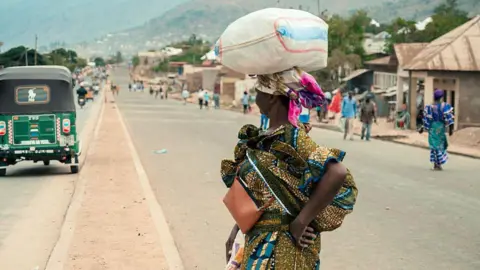
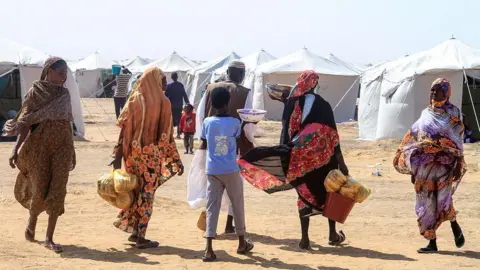
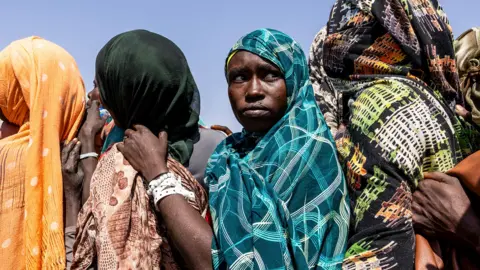
Despite Hemedti's claims of wanting peace, his troops have been implicated in massacres and severe human rights violations, raising serious concerns among international observers. The ongoing power struggles between the RSF and the national army led to an escalation of violence, with devastating consequences for civilians in Sudan.
In the wake of international scrutiny and accusations of war crimes, Hemedti finds himself in a precarious position as he attempts to balance military might with public perception, while eyeing a potential future as a powerful political player in a fractured Sudan.