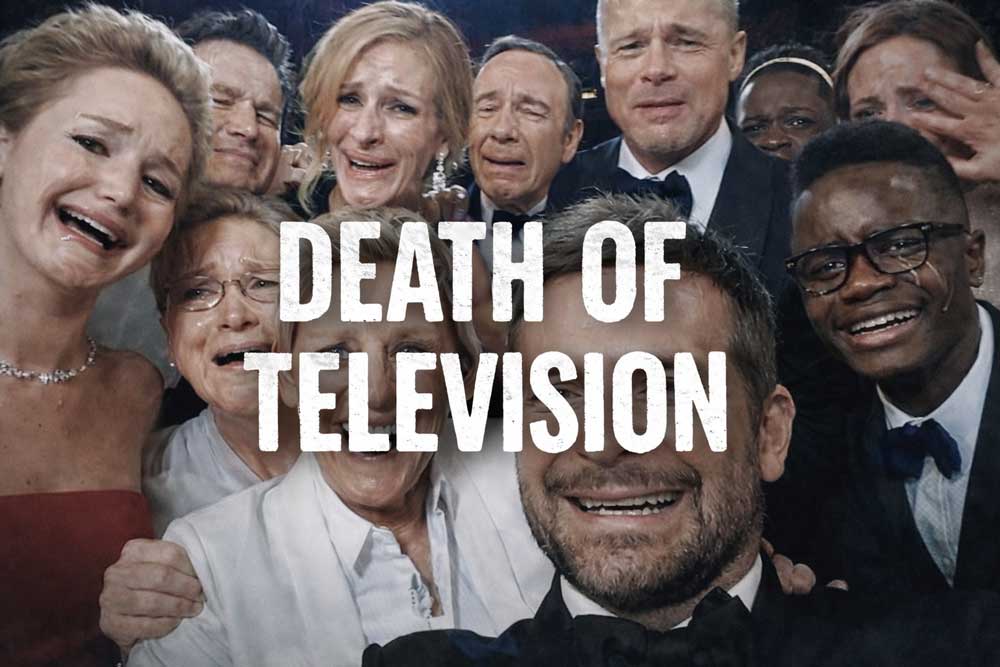
Television isn’t dying. It’s already dead.
For generations, broadcast television was the cultural center of gravity. If a moment mattered, it happened live on TV. The Oscars weren’t just an awards show; they were a national event, a shared experience that pulled tens of millions of eyes at once.
Those days are gone.
When the Oscars Owned the Culture
In 1998, the Academy Awards drew more than 57 million television viewers. That wasn’t niche success; that was cultural dominance. Nearly one in four Americans with a TV was watching the same thing at the same time.
By 2025, the Oscars struggled to reach around 19–20 million total viewers, and that figure includes streaming and mobile viewing. The number of people watching on traditional broadcast television is significantly lower. That’s not a dip. That’s a collapse.
This Isn’t Adaptation. It’s Admission.
Television no longer controls attention, culture, or relevance. The shared experience it once monopolized has splintered into millions of feeds, clips, reaction videos, and algorithmic timelines.
Awards shows didn’t lose relevance because of bad hosts or weak nominees. They lost relevance because the medium that once amplified them lost its grip.
The Numbers That Killed Broadcast TV
By 2025, streaming accounts for roughly 45% of all U.S. viewing time, surpassing broadcast and cable combined. Broadcast television now represents around 20% of total viewing and continues to shrink every quarter. More than a quarter of Americans no longer watch live television at all. Culture is now consumed through clips, feeds, social platforms, or not at all.
Why Award Shows Don’t Matter Anymore
Television’s power was always communal. Millions watching together, creating one moment. Audiences don’t gather for appointment viewing anymore; they collide with content.
A three-hour broadcast cannot compete with a world where cultural relevance is measured in seconds.
Television’s Obituary
So when legacy institutions abandon broadcast, it isn’t innovation; it’s surrender. Audiences already voted with their attention. And television lost.