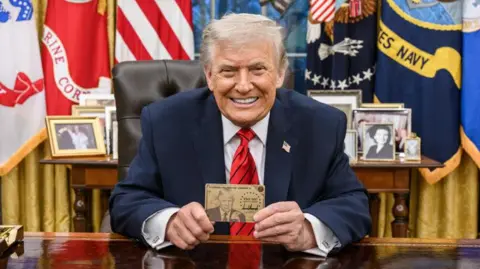
WASHINGTON (AP) — For the first time, U.S. Senators will scrutinize the military's role in President Donald Trump’s deployment of the National Guard in various American cities. This unprecedented hearing, set before the Senate Armed Services Committee, arises amidst legal challenges and debates surrounding state sovereignty and the appropriateness of military force on domestic soil.
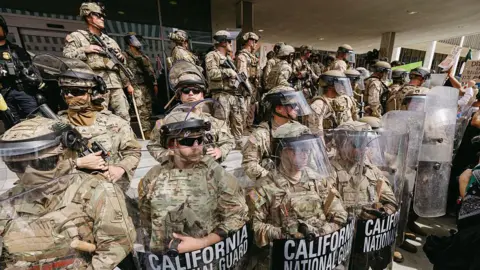
The hearing, scheduled for Thursday, highlights the contentious strategy employed by Trump to station National Guard troops in urban areas, often against the wishes of local mayors and governors. Lawmakers are gearing up for what promises to be challenging inquiries into the legality of these maneuvers amid growing scrutiny.
Democratic Senator Tammy Duckworth of Illinois, leveraging her experience as an Army veteran, has indicated her commitment to accountability regarding the National Guard's domestic role. Duckworth threatened to withhold her support for the annual defense bill if leadership continued to block the hearing, arguing it is severely overdue.
She criticized Trump, stating, “Donald Trump is illegally deploying our nation’s service members under misleading if not false pretexts.” Historically, the deployment of the National Guard has focused on responses to natural disasters, not on immigration enforcement or major law enforcement operations.
Questions abound regarding the impacts on military readiness and training due to these deployments, particularly when they divert resources from traditional missions. Duckworth emphasized the negative consequences for service members who may find themselves entangled in legal battles during operations led by federal immigration enforcement personnel.
Recent tragically highlighted this issue when two West Virginia National Guard members were injured near the White House, showcasing the risks of having military personnel deployed in areas of civil unrest.
In a parallel development, a federal judge halted Trump’s deployment of the California National Guard, mandating control be returned to state authorities, further highlighting the contentious nature of these military deployments.
The outcome of the upcoming hearing could set a critical precedent regarding the military's role in American domestic affairs, with implications that stretch deep into the provisions of the Constitution governing state and federal powers.