Propped up in her hospital bed, railway conductor Olha Zolotova speaks slowly and quietly as she talks about the day her train was hit by a Russian drone.
When the Shahed [drone] hit, I was covered in rubble. I was in the second car. People pulled me out, she says. My eyes went dark. There was fire everywhere; everything was burning, my hair caught fire a little. I was trapped.
Olha is a victim of Russia's increasingly frequent attacks on the Ukrainian railway system – vital infrastructure that keeps the country moving three and a half years since Moscow's full-scale invasion.
Ukraine's 21,000km-long (13,000-mile) railway system is not merely a mode of transport; it is a central pillar of Ukraine's war effort and a powerful national symbol of resilience.
Olha's injuries were severe, so she was transported more than 300km (185 miles) to a special hospital in the capital, Kyiv, dedicated to railway workers.
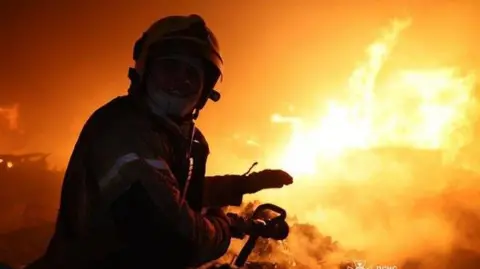
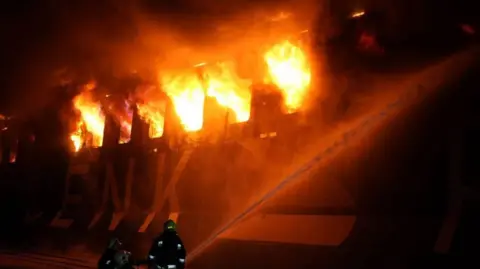
Her train was hit earlier this month at a station in Shostka in the northern Sumy region. As rescue workers sought to tend to the injured, a second Russian drone struck the station – a type of hit known as a double tap. Ukraine says civilians and rescue teams were directly targeted, which would constitute a possible war crime under international law.
Thirty people were hurt, including three children, and one man was found dead, possibly from a heart attack. According to national rail operator Ukrzaliznytsia (UZ), there were twice as many attacks in September compared to August – not just on trains but on the infrastructure supporting the rail network.
Half of the attacks on the railways since the war began have taken place in the past two months. Officials believe Russia's increasing capacity to produce inexpensive drones is a factor in this intensification, allowing it to target both freight and passenger trains as part of a larger military strategy aimed at disrupting Ukraine's logistics and instilling fear among civilians.
The threats are compounded by a recent uptick in attacks on Ukraine's power infrastructure, leading to fears of an especially difficult winter ahead. Ukrainian railway leaders are rallying support for enhanced air defenses while maintaining a focus on operational resilience to ensure that critical rail services continue.
As the conflict endures, the resolve of the Ukrainian people remains firm, symbolized by the bravery of railway workers and the essential role of rail transport in connecting the nation.