
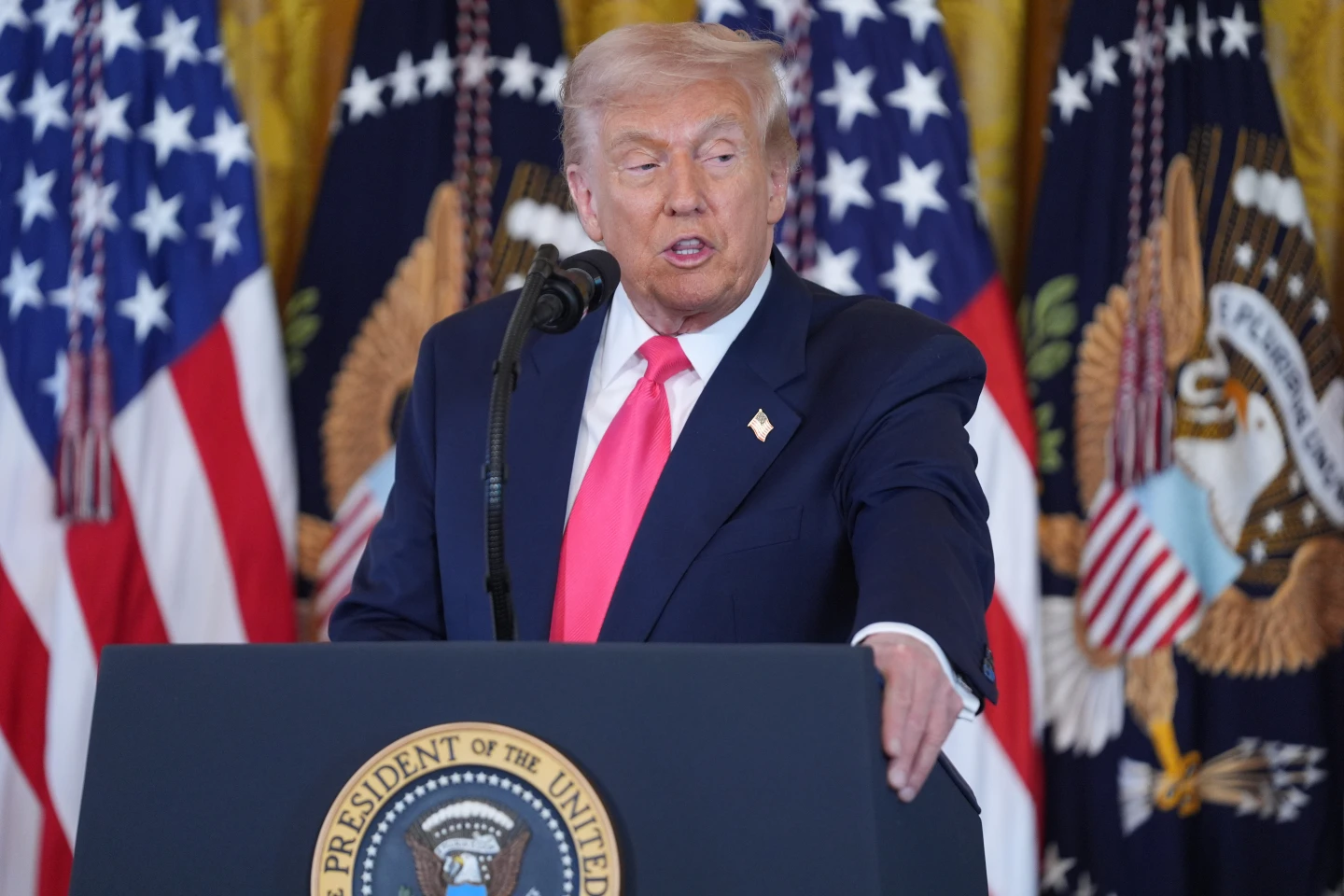
ATLANTA (AP) — The Georgia election interference case involving Donald Trump has seen a shift in leadership. Following the disqualification of Fulton County District Attorney Fani Willis due to a conflict of interest arising from a personal relationship with her appointed special prosecutor, executive director Pete Skandalakis of the Prosecuting Attorneys’ Council of Georgia announced he would assume control of the case.
Skandalakis stated in a released statement that his effort to find another conflict-free prosecutor to take over the case was unsuccessful, as several contacted prosecutors declined the appointment. 'The public has a legitimate interest in the outcome of this case,' he remarked, highlighting the importance of transparency moving forward.
Despite Trump's current role as president seemingly shielding him from immediate prosecution, multiple co-defendants, including high-profile figures like former White House chief of staff Mark Meadows and ex-New York mayor Rudy Giuliani, still face charges.
The striking change in oversight comes in the wake of heightened scrutiny over Willis' conduct. A romantic involvement with her special prosecutor surfaced as a primary reason for her disqualification—a claim made by the defense attorneys arguing that it created a conflict of interest. Consequently, the Georgia Court of Appeals cited 'an appearance of impropriety' when removing Willis from her leadership role.
Following a series of legal challenges and rulings, including a recent declination by the Georgia Supreme Court to hear Willis’ appeal regarding her disqualification, the case now rests on Skandalakis’ shoulders. He has the authority to either continue pursuing the charges as previously envisioned by Willis or reassess the case's trajectory altogether.
While the exact steps Skandalakis will take remain to be seen, his commitment to a thorough and open approach underscores the gravity of the public’s interest in this high-profile case and the implications it may hold for both state and federal legal frameworks.

