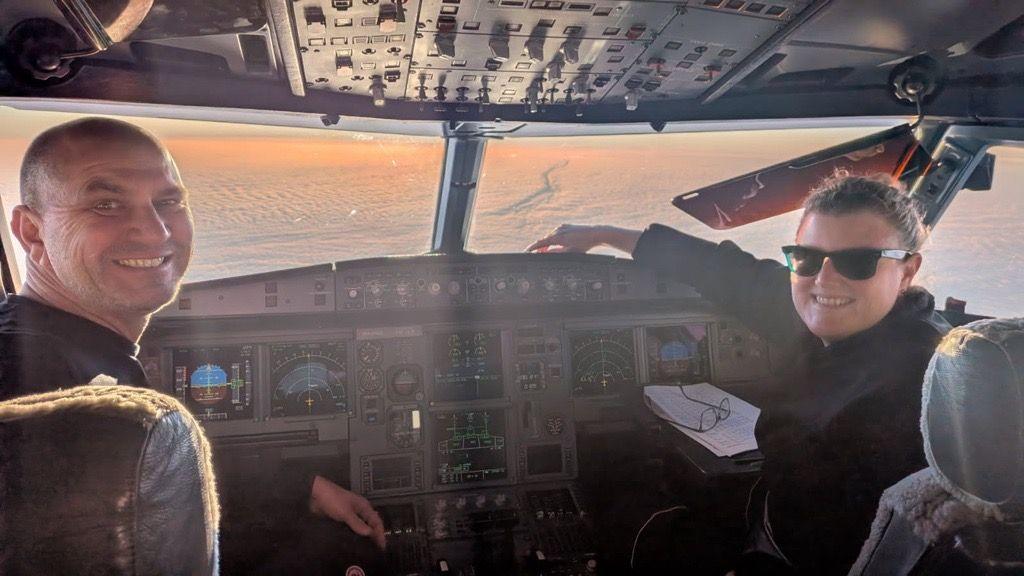
A Daring Mission in the Heart of Winter
On 31 July 2026, Australian aviation company Skytraders staged a flying rescue against a backdrop of darkness and -43 °C temperatures. The team, consisting of husband‑wife pilots Rod and Louise Robertson, executed the rare first July medical evacuation from McMurdo Station in Antarctica.
Skytraders’ Airbus A319—nicknamed Snowbird 1—was fitted overnight with a stretcher inside a custom cabin configuration, a process that demanded 24 hours of engineering and design work. The crew then faced a 12‑hour wait for a weather‑window that finally opened after a blustery snowstorm had blunted the 3‑km runway at Hobart’s Phoenix Airfield.
The flight endured no daylight; the pilots spoke of a midnight take‑off into a sky of steaming clouds that foreshadowed intense winds and icy winds. Rod Robertson was in the left seat, Louise in the right, and together they guided the aircraft to the compacted, reclaimed runway before turning for Christchurch. Security, medical teams, and meteorologists on the ground worked in tandem to keep the operation on schedule.
Once the patient boarded Snowbird 1, the aircraft carried him to Christchurch, where immediate treatment was administered. The patient’s trajectory shows a smooth recovery trajectory, and relief extends across the international community involved in Antarctic operations.
Emma Campbelling, head of the Australian Antarctic Division, praised the “precision and partnership” that underpinned the mission, underscoring the global cooperation that keeps the Antarctic research community alive. Former missions, such as the 2020 evacuation under similar conditions, further demonstrate the unique challenges faced by crews working in Earth's southernmost frontier.