
In brief
Amid ongoing U.S.-Canada trade tensions, the CEO of Brown-Forman, which owns Jack Daniel's, has labeled the recent ban on U.S. alcohol by Canadian provinces as "worse than tariffs," highlighting the economic ramifications of such actions on cross-border trade.
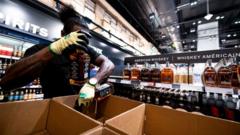
In a bold response to trade disputes, Canadian provinces, particularly Ontario, have begun to remove U.S.-made alcohol from their shelves, an act that the maker of Jack Daniel's is condemning as a detrimental retaliation against U.S. tariffs. This action was most evident when the Liquor Control Board of Ontario (LCBO), one of the largest alcohol purchasing bodies globally, announced on Tuesday its decision to eliminate American products in response to the tariffs introduced by the Trump administration.Brown-Forman CEO Lawson Whiting stated that this move is "disproportionate" and equates to a significant loss for the company, undermining their sales entirely. He emphasized the difference between tariffs and removing a product from the market, stating, “I mean, that's worse than a tariff, because it's literally taking your sales away, completely removing our products from the shelves.”In retaliation to the U.S. tariffs on Canadian goods, Canada has imposed corresponding 25% levies on American imports, including a range of alcoholic beverages. The LCBO predominantly sells nearly $1 billion worth of U.S. alcohol annually, and Ontario Premier Doug Ford confirmed that these products are no longer available for purchase.While Whiting acknowledged the impact, he noted that Canada represents a mere 1% of Brown-Forman's overall sales, suggesting that the company can endure this setback. Meanwhile, Canadians are encouraged by the LCBO to support local producers, a shift that some consumers are already adopting amid the escalating tariffs.Prime Minister Justin Trudeau criticized the U.S. position, describing the tariffs as "a very dumb thing to do" and expressing concerns about the wider implications for the Canadian economy. This ongoing dispute has been a focal point in discussions surrounding trade relations, with Trudeau also voicing worries about U.S. intentions to undermine the Canadian economy for political gain.As the trade war intensifies with retaliatory measures affecting various industries, including automotive, Brown-Forman is closely monitoring potential developments in Mexico, which accounted for 7% of its sales in 2024, indicating a heightened sense of caution amidst these geopolitical tensions.


