
In brief
Carney emphasizes the need for Canada to rethink its economic structure in response to US tariffs, suggesting a pivot away from traditional partnerships.
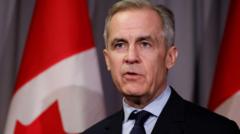
Canadian Prime Minister Mark Carney declared that the classic economic relationship with the United States, characterized by close integration and security collaboration, has come to an end. This statement followed a cabinet meeting in Ottawa where Carney addressed the impact of US President Donald Trump’s recent tariff announcements. Carney called for Canadians to "fundamentally reimagine our economy" in light of these developments, stressing that retaliatory tariffs would be employed to create "maximum impact" on the US economy.Trump’s administration revealed plans to impose a 25% tax on imported vehicles and automotive parts, marking a significant escalation in trade tensions. Carney labeled the original Automotive Products Agreement from 1965 as crucial to Canadian economic history, now rendered obsolete by these tariffs. He emphasized that Canada could still maintain a robust auto industry even in the presence of US tariffs, provided there is concerted effort from both the government and business sectors to "reimagine" the industry.With April 2 set as the effective date for the new car tariffs, which will be followed by incremental charges on parts, Canada has already retaliated against US tariffs with approximately C$60 billion in duties. Amid these backlash measures, Carney has shifted his campaign strategy ahead of the imminent general elections, signaling a readiness to actively address the trade dispute. US President Trump recently warned Canada and the European Union against collaborating to harm the US economy, suggesting that severe tariffs would follow if such actions were taken. Carney revealed that Trump reached out to him for a telephone conference scheduled in the upcoming days, indicating that this would be their first direct communication as leaders.The response has sparked dialogue among Canadian political groups, with Conservative leader Pierre Poilievre denouncing the tariffs as "unjustified," while NDP leader Jagmeet Singh labeled them a "betrayal." Singh's day was spent meeting with labor representatives and auto workers, indicating the tariffs might affect the upcoming elections, with Canadians heading to the polls on April 28.In a broader context, the trade implications stretch beyond Canada. Mexican President Claudia Sheinbaum, addressing the tariffs, hinted at a collective regional response to safeguard Mexican industries amidst these trade challenges. With continued negotiations expected, the unfolding situation will shape not only the Canadian economy but also its international trade landscape moving forward.

