
Iran's Overnight Missile Assault Signals Growing Confidence in the Middle East
When Iran launched war‑planes and drones at Israel last night, the immediate military impact seemed modest. Yet the political importance of the strike could far outweigh the tactical gains.
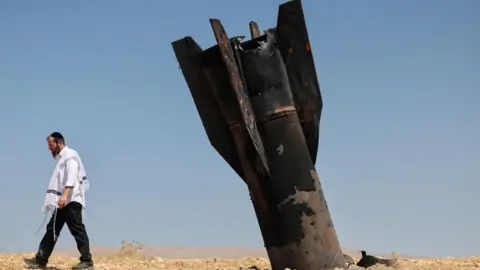
Traditionally, Iran has justified attacks on Israel as retaliation for actions targeting Iranian territory or leadership. This time, Tehran responded to an Israeli strike on a Hezbollah‑linked site in southern Beirut, marking a departure from past patterns.
On Monday, Iranian authorities announced a halt to further Israeli strikes, but the choice to attack was significant. It raises a key question: why would Tehran risk renewed Israeli retaliation and potential U.S. diplomatic fallout in the midst of fragile talks?
One explanation lies in Iran’s reassessment of its position after months of conflict. Despite sanctions, naval blockades, and air pressure, the regime survived—its security apparatus remains intact and no uprising materialised. This endurance may have reshaped Tehran’s calculus, shifting from a posture of fragility to one of hardened resilience.
The strike could therefore be viewed less as immediate retaliation and more as deterrence—an assertion that attacks on Iran’s allies are no longer treated as separate from attacks on Iran itself. This message is especially relevant for Hezbollah, Iraqi militias, and other members of the so‑called Axis of Resistance, whose trust in Iran’s backing has always been crucial.
The timing of the assault is also noteworthy. U.S. President Donald Trump had recently hinted at a possible deal, suggesting Qatar that Iran should avoid provocative moves that might jeopardise negotiations. Tehran’s decision to strike may reflect an alternative view: that demonstrating tactical capability can strengthen its bargaining position rather than weaken it.
From Tehran’s perspective, the action signals to Washington and Israel that Iran still retains options. It is not a full‑scale escalation, but a calculated risk to establish a precedent and send a political message without triggering an all‑out war.
Questions remain whether this strategy will pay off. Can Tehran absorb another round of Israeli or U.S. aerial strikes while simultaneously engaging in diplomatic talks? A positive outcome would mark a significant shift in how the Islamic Republic views its security and its role in the region.
Public opinion in Iran is split. Some see the attack as a justified defense of Lebanon, while others worry about the risks of a broader conflict. A few view it as a strategic display to rally domestic support, while others view it as a miscalculation that could destabilise delicate negotiations.
The incident underscores a broader trend: Iran is increasingly willing to combine limited military action with diplomatic engagement, seeking to negotiate from a position of strength while enforcing its own “red lines.” Whether this approach is sustainable remains to be seen, but the strike signals a new chapter in Iran’s regional strategy.