Inside the Secret Service’s Shell Game: How Presidents Slip Past Eyes
On July 8, President Donald Trump boarded Air Force One in front of watching television cameras, only for an unobserved transfer to a C‑32A military aircraft—a move disguised by a catering truck at Turkey’s Ankara airport. The Secret Service’s covert swap, described by former agents as a classic “shell game,” masks the president’s whereabouts, stymieing any outside attempt at interference.
The decoy operation involved a fully operational catering truck waiting as Trump’s Air Force One lifted off. While the jets departed, agents slipped the president onto a marked C‑32A destined for RAF Mildenhall, England. Those remaining on the Boeing stayed unaware, continuing their press‑entertainment mission as if nothing had changed.
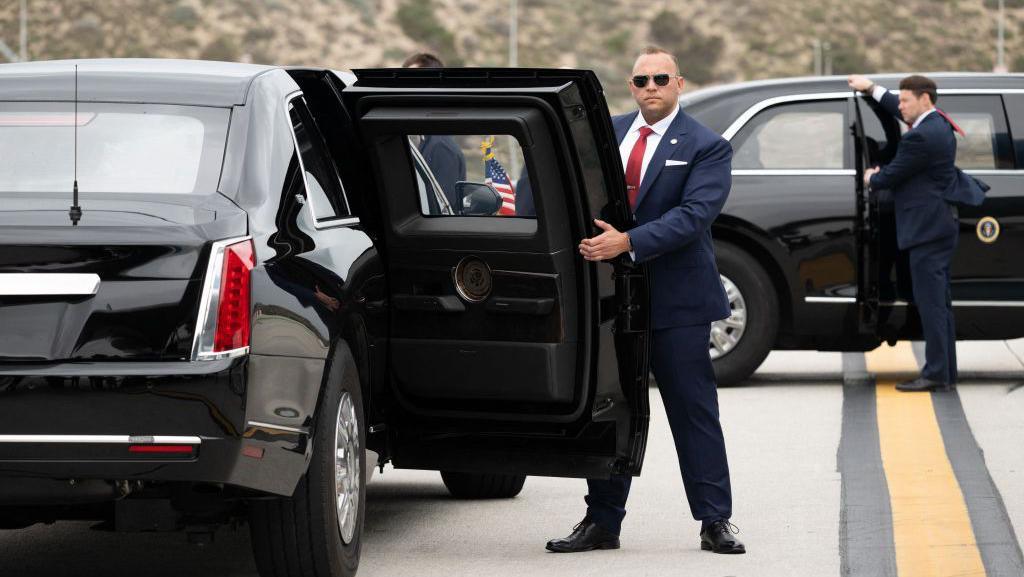
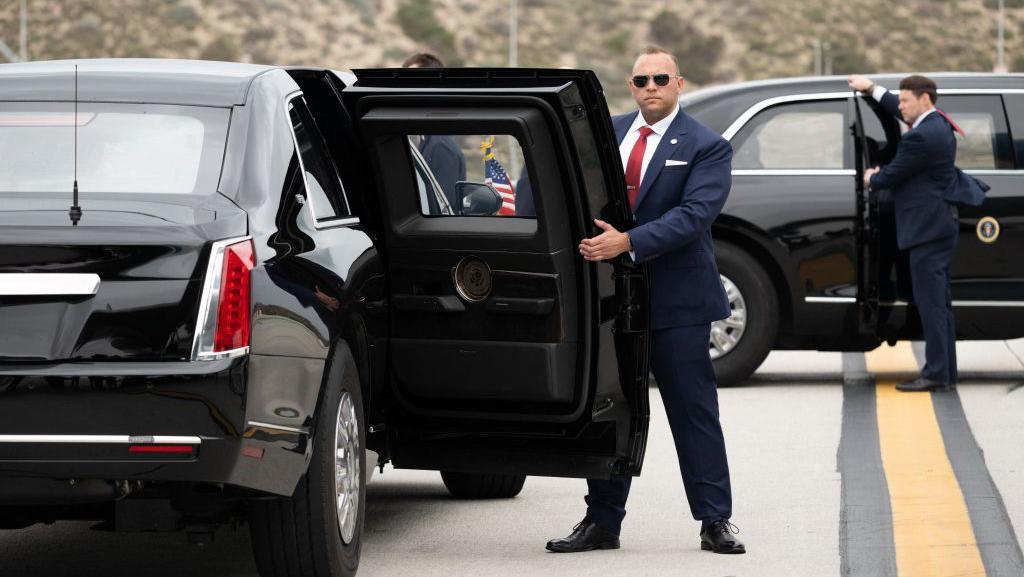
Ronald Kessler, a writer on national‑security affairs, explains that such deception is routine: “It’s very common,” he says. Robert McDonald, a former Secret Service agent who once ran motorcades for presidents, notes that signature motorcades feature twin armored limousines—named the “Beasts” that swap positions so the public can’t map who’s in which vehicle.
Paul Eckloff, a former SSA official, and CIA veteran Marc Polymeropoulos discuss the ultimate decision point: only a high‑level group could deem the threat so serious that a president would be boarded onto a hidden jet. They point to earlier deceptions—Bill Clinton’s 2000 trip from India to Islamabad using an unmarked jet, George W. Bush’s 2003 holiday flight that vanished into a black‑out Air Force One, and Joe Biden’s 2023 Ukraine visit with a lean press pool—to illustrate a pattern of secrecy that protects the commander‑in‑chief but leaves on‑board journalists in the dark.
The latest incident remains shrouded. The Secret Service has not commented, and the White House has neither confirmed nor denied the swap, citing protection protocols. Experts argue that while the planes used indecipherable signals and switched coms, observant journalists saw blinds lowered, a clear sign that the aircraft’s cockpit was a known risk zone.
Ultimately the incident underscores the Secret Service’s flexible, low‑profile stance: the agency can improvise in real time, pre‑planning for a thousand scenarios, but it rarely informs passengers of a potential threat. With the threat level in Turkey presumably “relatively substantial and quite high,” as McDonald said, the government likely weighed the decision to fly a single, heavily protected jet to keep the president safe—at the price of transparency. The next step, anyone may ask, is whether the pressure on old guard secrecy needs to shift toward better communication, or whether the cost of derailing a potentially jeopardized president outweighs the ethical duty to inform those accompanying the president.
A pilot in the C‑32A with Trump on board lands RAF Mildenhall, England.