
In brief
As discussions progress on a potential UK-US trade agreement, analysts caution that the details may hold more challenges than anticipated. Amidst tariff concerns and evolving post-Brexit negotiations, the path forward remains uncertain.
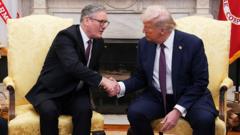
Vice-President JD Vance's recent remarks have sparked hope for a UK-US trade deal, with his belief that the relationship with the UK may facilitate a smoother negotiation process compared to other European nations. UK Business and Trade Minister Sarah Jones has echoed this sentiment, confirming that talks are underway, though she did not provide specifics on the timeline.However, the key issue in evaluating the effectiveness of these discussions is the exact nature of the term "deal". Following Prime Minister Sir Keir Starmer's meeting with President Donald Trump earlier this year, the UK delegation preferred to describe the ongoing negotiations as an "economic deal," indicating that it may not encompass a sweeping free trade agreement that covers a vast range of goods.In the past, during Trump's initial term, talks progressed until contentious subjects such as medicine pricing and food standards dominated the conversation. Trump's administration previously expressed concern regarding the UK's alignment with European Union regulations post-Brexit and how it could affect trade ties.Currently, discussions surrounding the "deal" appear to hinge significantly on collaboration in science, technology, and artificial intelligence, while striving to mitigate tariffs. Nevertheless, the introduction of a 10% tax on UK imports, categorized as "reciprocal tariffs," poses a substantial barrier. This tariff has been uniformly applied to various trading partners, and the US administration seems hesitant to negotiate, emphasizing its adherence to this baseline rate.Contrarily, the UK occupies a unique position in comparison to other nations; while other countries face elevated tariffs, the UK maintains a relatively favorable trade balance with the US. This disproportion is troubling, especially as tariffs on major industries such as automobiles are set significantly higher at 25%. The current tariff structure seems particularly disadvantageous given that the US enjoys a trade surplus with the UK.In light of impending negotiations related to post-Brexit arrangements and a UK-EU summit scheduled for next month, there is potential for friction. The UK and EU aim to streamline export regulations and reduce bureaucratic barriers for food and agricultural products—an area of past US interest that might become intertwined with ongoing discussions.Additionally, US officials have expressed an inclination for allies, including the UK, to collaborate on countering China's influence, potentially complicating Britain's negotiating position. While the UK government has championed the narrative of becoming the "most connected economy in the world", aligning with US technological advancements and maintaining robust relationships with EU and East Asian markets, newfound leverage following recent financial market turbulence may alter the dynamics in these talks.As the UK navigates its post-Brexit landscape, the demand for a favorable trade deal with the US has intensified. This moment represents both an opportunity and a challenge, underscoring the need for meticulous attention to detail in forthcoming discussions.

