
In brief
In a remarkable transformation, Sweden emerges from its historical neutrality to become a trusted NATO ally, stimulating growth in its defense sector post-Ukraine invasion.
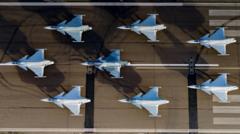
Sweden has undergone a significant transformation, shedding its historical neutrality as it fully embraces the North Atlantic Treaty Organization (NATO) following a crisis that stemmed from Russia's invasion of Ukraine. This shift has not only secured its national safety but has also invigorated its defense industry, with companies like Saab reaping substantial benefits as a result.Micael Johansson, the CEO of Saab, highlighted the pivotal changes in Sweden's perception, stating, "We're no longer a country that cannot be trusted." This sentiment resonates through the company’s successful negotiations with the NATO Support and Procurement Agency (NSPA) since Sweden joined NATO in March 2024. The newfound access to the agency is enlightening, paving the way for significant contracts and partnerships that were previously inaccessible due to Sweden’s non-aligned status.Finland’s involvement mirrors Sweden's developments. Jukka Siukosaari, Finland's Ambassador to the UK, articulated the advantages of NATO membership, which has propelled Finnish defense companies to new heights and opened diverse markets. Both Finland and Sweden have committed to increasing their defense spending significantly, aiming for 2.6% to 3% of GDP over the next three years, outpacing several long-established NATO members.Recent NATO initiatives bolster security along Europe’s northern flank, pushing for the establishment of new bases and joint operations among member states. The collaborative efforts include The Joint Nordic Air Command, uniting the air forces of Finland, Sweden, Norway, and Denmark and enhancing regional operational cohesiveness in response to perceived Russian aggression.Despite some turbulence within NATO regarding tech sovereignty, there exists an acknowledgment that Europe must escalate its defense capabilities independently of U.S. support. Johansson pointedly noted, “Europe's Trans-Atlantic relationship will always remain important,” while also stressing the necessity for European nations to enhance their own defense industries.The evolving landscape favors not only established corporations like Saab but also a plethora of small and medium enterprises that are poised to meet new demands for high-tech and conventional military hardware. Finland's "Nokia-spin-offs" are one example of how emerging businesses in the defense sector are positioned to capitalize on technological advancements in surveillance, drone technologies, and cybersecurity.Moreover, the concept of "Total Defence" has surfaced as a vital strategy amongst Nordic countries, encompassing broader infrastructure—including energy, communication networks, and essential services—into the defense paradigm. This holistic approach underscores the growing intertwining of national infrastructure and security, challenging traditional definitions of defense spending.As NATO continues to adapt and operate within the complexities of the modern security landscape, Sweden and Finland’s experiences are serving as critical case studies for other member nations on the role of innovation, collaboration, and strategic rearmament in safeguarding national interests amidst rising global tensions. In an era marked by uncertainty, these Nordic nations are redefining security dynamics and showcasing a viable model for how countries can build trust, enhance defense capabilities, and contribute positively to regional stability while fostering economic growth.



