
In brief
US stock indices experience wild fluctuations amid rising trade tensions, fueling fears of a looming economic downturn.
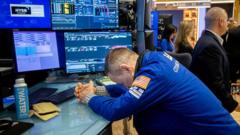
U.S. stock markets experienced significant volatility on Monday as investors navigated fluctuating sentiments surrounding President Donald Trump's recent tariff announcements. The S&P 500, which represents 500 of the largest companies in the U.S., closed down approximately 0.2% after a day characterized by intense trading, reminiscent of wild swings seen during the Covid-19 pandemic. The brief respite occurred despite Trump amplifying his tariff threats against China, with U.S. Treasury Secretary Scott Bessent announcing ongoing discussions with Japan and other nations.Trump provided mixed messages, suggesting that while some tariffs might become permanent, others would be renegotiated. Responding to inquiries about delaying recently introduced import taxes, he reiterated his commitment to the tariffs. Following Trump's announcement, both U.S. and UK stock markets faced their largest one-day declines since the onset of the Covid-19 pandemic in 2020, with the S&P 500 experiencing a more than 10% decrease over just three days—a plunge akin to those seen during the 2008 financial crisis.Reflecting the unsettling atmosphere, prominent business leaders including Jamie Dimon and Bill Ackman have made public statements regarding the adverse impacts of these market movements. Yet, Trump remains resolute, recently threatening to impose an additional 50% tariff on Chinese imports if Beijing doesn't reverse its retaliatory actions, which would significantly increase the total levy on Chinese goods.Concerns over a potential trade war between the U.S. and China have escalated, particularly with China's recent decision to enforce retaliatory tariffs of 34% on American goods. Analysts are warning that unresolved trade negotiations could have drastic implications for the global economy, with fears of a severe hit to corporate profits and a potential slowdown in economic growth becoming pervasive among investors.On Monday, the S&P 500 briefly fell by over 20% from its recent February peak, a milestone typically associated with entering a "bear market." However, a rumor regarding possible tariff suspensions sent shares soaring over 7% in a matter of minutes. Howard Silverblatt, a senior index analyst at S&P Dow Jones Indices, noted the unparalleled nature of such market swings during his extensive Wall Street career.As the trading day concluded, the Dow Jones Industrial Average fell by 0.9%, while the Nasdaq showed minimal movement, inching up by 0.1%. European exchanges reflected the turmoil, with the FTSE 100 plummeting 4.4% to its lowest in over a year. The Asian markets also recorded steep declines, leading one analyst to describe the situation as a “bloodbath.” The shockwaves of market instability impacted commodity prices too, with oil and copper declining while gold, typically viewed as a safer investment, also slipped in value.

