In brief
Moroccan police intercepted more than a hundred migrants in the town of Fnideq, close to the Spanish exclave of Ceuta, amid heightened security measures following a July surge that saw 78,000 arrivals, with 100 deaths reported. Tear gas was used to disperse groups gathering on nearby hills. Spain has responded by deploying over 1,500 officers and erecting barriers, while EU neighbours such as Italy have introduced border checks to curb a potential new wave of arrivals. The situation underscores the fragile balance of the Schengen area and the humanitarian toll of irregular migration.
Moroccan police intercepted more than a hundred migrants in the town of Fnideq, close to the Spanish exclave of Ceuta, amidst a surge that saw 78,000 people arrive by sea last month.
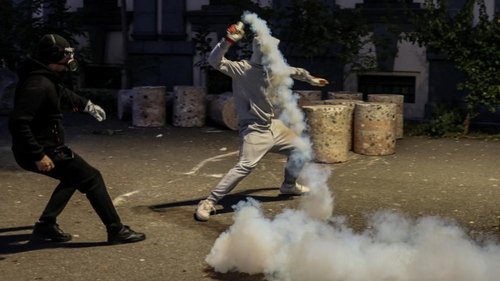
That influx yielded an estimated 100 deaths, according to the city’s mayor, while most of the arrivals reportedly returned to Morocco. In response, Moroccan authorities tightened security around the border, deploying police in riot gear and using tear gas to disperse migrant groups gathered on nearby hills.
Spanish officials have bolstered defenses by stationing over 1,500 officers, installing a floating barrier and a metal fence, and doubling security at the breakwater entrance compared to the day before. The reinforced measures are a direct reaction to social media posts calling for a new mass crossing next Saturday, which Morocco has warned it will prosecute participants and organisers for.
The centre of the cross‑border crisis has shifted from the right‑wing policies of the far‑right in the Spanish Parliament to an emergency military response that is under scrutiny from EU neighbours. Italy, Finland, Denmark and the Czech Republic have invoked Schengen checks and temporarily suspended the open‑border regime with Spain, citing concerns about new arrivals in Ceuta. Spanish Prime Minister Pedro Sánchez has blasted the EU’s response as misguided, insisting that Ceuta is not part of Schengen and therefore the migrants cannot freely travel to the European mainland.
In a broader note, the tension highlights the ongoing debate surrounding irregular migration from sub‑Saharan Africa, the humanitarian costs of mass crossings, and the fragile political agreements that underpin Europe’s open‑border policy.