
In brief
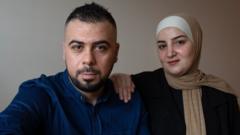
Abdullah Al Nofal, a Syrian refugee, reveals the traumatic details of his imprisonment at Al-Khatib prison, known for its brutal treatment of detainees. As his wife, Douna Haj Ahmed, discovers the reality of her husband's dark past amid the turmoil following Assad's fall, they share their story to shed light on the horrors faced by many Syrians.
It was in December that Douna Haj Ahmed, a Syrian refugee residing in London, stumbled upon the horrifying realities of her husband Abdullah Al Nofal's past during a news broadcast. The report showcased prisoners escaping from Assad's oppressive regime after rebel forces had displaced the president. As Abdullah sat beside her, he revealed, "This is where I was arrested, this is the place," marking a painful moment of disclosure about his detention in what is infamously known as "Hell on Earth," Al-Khatib prison.Douna, whose family also faced imprisonment throughout Syria’s brutal civil war, understood the agony of her husband’s experiences but had never grasped their full extent until this revelation. "It was a turning point. I saw him weak. I saw him crying," Douna shared, expressing the depth of emotion that surfaced as Abdullah contemplatively confronted his past. She emphasized their wish for the world to hear the stories of suffering endured by Syrians like Abdullah.In July 2013, while working as a storekeeper for the International Committee of the Red Cross in Damascus, Abdullah's life took a wrenching turn when he was intercepted at a military checkpoint. Although he had initially participated in protests against Assad's government in their inception in Deraa, he distanced himself from the escalating violence. It was at the checkpoint where his life would dramatically change. Handcuffed, blindfolded, and thrown onto a green bus, Abdullah found himself in solitary confinement for three agonizing days, enduring a complete void of sound and light.Eventually transferred to the notorious Al-Khatib facility, Abdullah was crammed into a cell with around 130 other detainees. This detention center became a site of terror and unimaginable brutality. Human rights organizations report that nearly 60,000 individuals faced torture and death at the hands of the Assad regime within such facilities. Details from a pivotal trial in Germany brought to light the atrocities committed there, which included horrific accounts of torture, sexual violence, and dehumanization.During his harrowing month-long imprisonment, Abdullah bore witness to relentless suffering. He vividly recalls the cries of fellow inmates undergoing torture, with many enduring severe injuries. “Every minute it's like you're dying,” he recounted, explaining that detainees were regularly subjected to beatings to extract confessions that often led to even more severe torture if denied.After twelve days of torment, Abdullah faced interrogation where he was brutally beaten. Fearing further agony, he fabricated a response, which he believed might allow him to survive the ordeal. Graced by partial fortune, he was released after a month, eventually fleeing Syria to seek safety. Abdullah found a new home in London with Douna, where they faced their past together.Now, with relative safety from the regime’s oppression, Abdullah hesitates no longer to recount his haunting experiences. "We finally finished with the regime, we can say, we are really free right now," he affirmed. Meanwhile, Douna, a passionate advocate for human rights, expressed her sorrow as she absorbed her husband’s narrative, realizing that the horrors of the past extend far beyond what she had imagined. As they courageously share their testimony, they become voices for the uncounted souls who suffered in silence, their stories begging to be heard in the wake of a dismal chapter in Syria’s history.


